


A deck is a significant investment in your home, and while your covered space provides shelter, proactive protection is necessary. Learning how to winterize a covered deck is about maintaining its structural integrity and safety. It involves checking materials, improving drainage, and factoring in specialized regional challenges here in markets like Virginia and Maryland.
We break down the technical steps, offer compelling tips for longevity, and provide a clear, informed plan to get your deck ready for the season.
Even though a covered deck offers protection from rain and sun, it still needs preparation to survive the colder months without damage. Learning how to winterize a covered deck is the key to deck longevity and safety. Our guide breaks down the simple steps you need to take, from deep cleaning and sealing to checking structural integrity and improving drainage.
By following these steps, you can save money on spring repairs and keep your outdoor space safe and comfortable until the warmer season returns.
Why Winterize a Covered Deck?
Many homeowners assume that a roof makes winter preparation unnecessary. Still, the winterizing process addresses factors a roof cannot protect against, such as structural movement, ice dams, and moisture trapped beneath the deck.
In Northern Virginia and Maryland, the region averages 45 to 60 freeze-thaw cycles annually, making proactive protection of the deck substructure critical.
Importance of Winterizing to Preserve Deck Longevity
Winterizing prevents the subtle damage caused by seasonal change. Extreme cold can cause the deck material to contract, leading to cracking or loosening of fasteners. Moisture that seeps into small cracks and freezes expands, widening the damage.
For wood decks, winterizing provides a critical layer of defense against rot and decay; for composite decks, it protects the surface from scratches and moisture held by debris.
Benefits of Winterizing Your Deck
The primary benefits of winterizing are:
- Damage Prevention: Stops the freeze-thaw cycle from weakening structural components.
- Material Protection: Extends the life of sealants, finishes, and the decking material itself.
- Safety: Inspections and repairs eliminate hazards such as loose boards or railings before winter.
- Clean Start: Your deck will be clean and ready for immediate springtime enjoyment.
Steps to Winterize Your Covered Deck
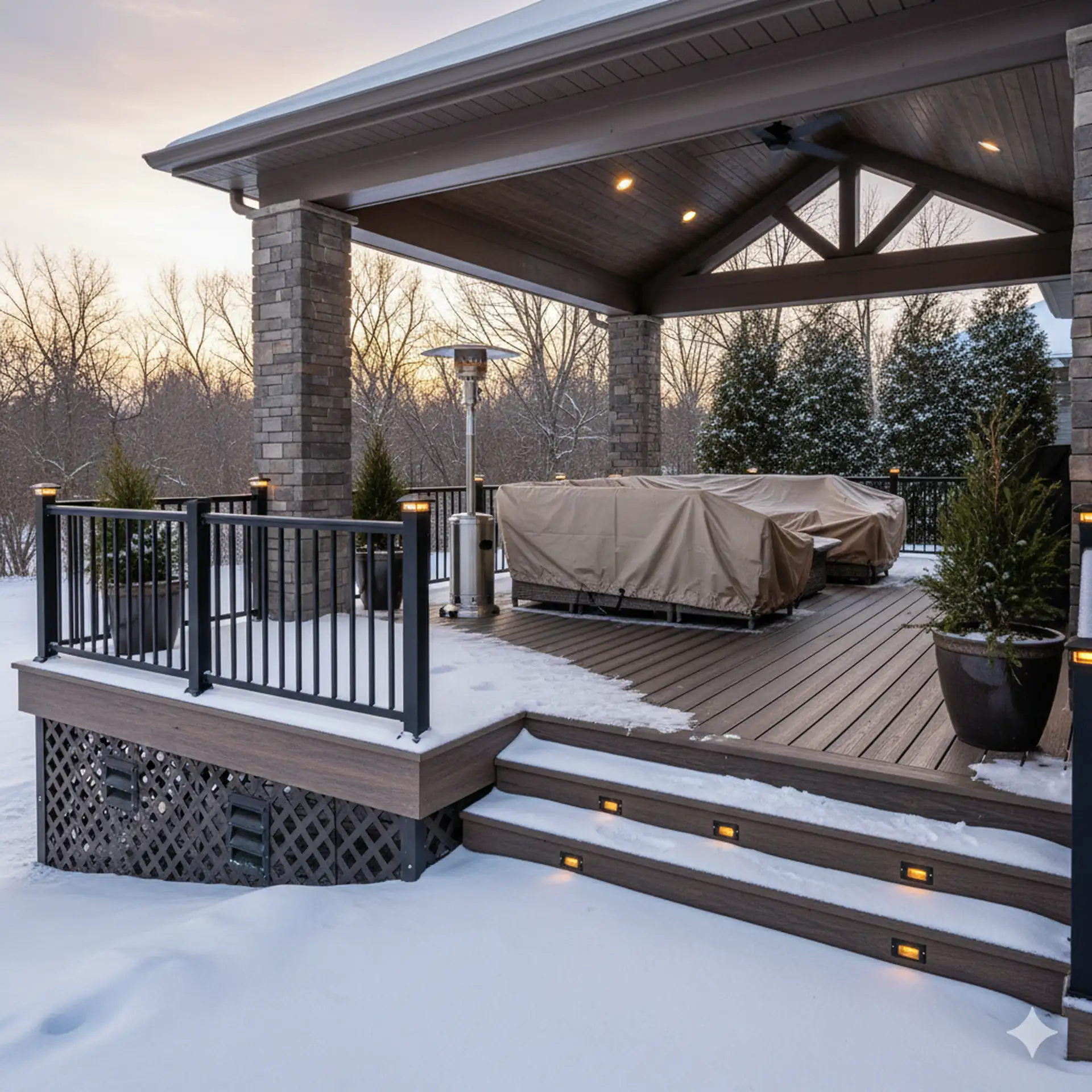
The process of winterizing a covered deck involves clearing, inspecting, protecting, and securing.
1. Clean Your Deck Thoroughly
Cleaning is the foundation of winterization. Sweep away all leaves, dirt, and debris, especially from corners where moisture tends to pool. Leaves trap moisture and can foster mold and mildew, which damage the deck surface and finish.
- Use a mild detergent mixed with water, or a deck cleaner recommended by the manufacturer.
- For wood decks, light pressure washing (below 1,500 PSI) can remove stubborn grime without damaging the wood. For composite decks, stick to soap and a soft brush.
- Allow the deck to dry completely before proceeding to the next steps.
2. Check for Damage and Make Necessary Repairs
Inspect the deck surface and structure for problems that can worsen in cold weather:
- Fasteners: Tighten any loose screws or nails.
- Boards: Replace any severely warped, cracked, or rotten boards.
- Splintering: Sand down any rough patches or splinters, particularly on wood.
- Structural Integrity: Check the railings, posts, and joists for signs of rot or instability.
3. Protect Your Deck with Sealant and Substructure Shielding
For wood decks, applying a fresh coat of sealant or stain is one of the most important steps to winterize deck surfaces.
- A good quality water-repellent sealer prevents moisture absorption, halting the freeze-thaw damage cycle.
- Apply the sealant on a dry day when temperatures are above 50°F for optimal curing.
- Substructure Shielding: For maximum longevity, apply Trex Protect Joist Tape during repairs or construction to shield the pressure-treated lumber beneath the deck from moisture.
- Note: Capped composite and PVC decks usually do not require sealant. Refer to your manufacturer’s instructions.
4. Cover Furniture and Decor
Store or protect anything that cold temperatures could damage or that could trap moisture against the deck surface.
- Store cushions, pillows, and rugs indoors.
- Move potted plants off the deck surface to prevent moisture rings, stains, and potential frost damage to the pots.
- Cover grills and large pieces of furniture with breathable, weather-resistant covers, or store them in a shed or garage.
5. Maintain Proper Drainage Around Your Deck
Although the roof provides overhead protection, moisture can still cause problems if water pools underneath or alongside the structure.
- Clear gutters and downspouts to direct water away from the deck perimeter.
- Ensure the ground slopes slightly away from the deck foundation to prevent water from collecting and freezing near the footings.
6. Install Deck Skirting or Barrier
Deck skirting adds a protective barrier around the deck’s perimeter.
- Skirting limits wind and moisture exposure to the substructure (joists and beams).
- Ensure that any skirting includes ventilation to allow air circulation, preventing excessive moisture buildup that can lead to mold or mildew underneath.
7. Use Deck-Specific Winterizing Products
Consider using specialized products designed for winter deck maintenance:
- Joist Tape: If performing structural repairs, install butyl-based tape over the tops of joists to shield them from moisture and prolong the life of the substructure.
- Safe De-Icers: Keep safe de-icers (such as calcium chloride) on hand for ice buildup on stairs or uncovered areas. Avoid rock salt, which can harm wood and composite surfaces.
How to Winterize Your Deck Rails and Stairs
Rails and stairs, especially if uncovered, are the most exposed elements of your deck.
Protecting Rails from Ice and Snow Accumulation
Railings, particularly those with horizontal elements or lighting fixtures, can collect snow and ice.
- Check all rail posts and balusters to ensure they are firmly attached and stable.
- If you have rail lighting, ensure all connections are secured and waterproofed. Deck lighting not only improves safety but also lets you monitor winter conditions.
Inspecting and Securing Stairs
Stairs pose the greatest risk during winter.
- Securely fasten all stair treads, as even minor movement can be dangerous when they are covered with ice or snow.
- Ensure adequate handrails are present and secure.
Technical Winterization for Longevity

Focusing on the materials’ physical properties helps maximize protection against winter damage.
Moisture and Structural Protection by Material Type
Different deck materials require varying levels of sealing and protection to withstand the freeze-thaw cycles.
| Deck Material | Recommended Winter Protection | Common Damage Prevention |
| Pressure-Treated Wood | Annual application of a clear or tinted water-repellent sealer. | Prevents water ingress and cracking/splitting from freezing. |
| Capped Composite Decking (e.g., Trex) | Cleaning and general debris removal; no sealant required. | Protects the polymer cap from prolonged exposure to moisture and staining. |
| PVC Decking (e.g., TimberTech AZEK) | Minimal maintenance; focuses on safe de-icing protocols. | Requires virtually no moisture protection; focus is on slip safety. |
| Substructure (All Decks) | Flashing/Joist Tape over pressure-treated wood joists. | Shields the internal structure from standing moisture, significantly extending the frame’s life. |
Material Composition and Cold Weather Integrity
The composition of synthetic decking affects how it reacts to sustained low temperatures. High-density polyethylene (HDPE) in premium composites retains better flexural strength than many natural materials below 32°F.
Proper installation spacing is non-negotiable; composite boards must have expansion gaps of ⅛ inch to 3/16 inch, depending on the installation temperature, to accommodate thermal movement.
Additional Tips for Winterizing a Covered Deck
Adding Outdoor Heaters for Year-Round Comfort
To enjoy your covered space even during colder months, consider heating solutions.
- Propane or electric radiant heaters can provide enough warmth for the sheltered space, making it pleasant for relaxing or outdoor dining.
- Always follow safety guidelines and local codes when installing features like permanent heaters.
Regular Inspection During Winter
The work is not done after the initial winterizing process.
- Periodically check the deck for ice dams forming near the house or along the roof edge.
- Sweep off any snow that accumulates in the covered area, paying special attention to stairs and ledges.
Frequently Asked Questions
How to enclose a covered deck for winter?
You can temporarily enclose a covered deck using clear vinyl panels, heavy-duty outdoor curtains, or custom-fit screen panels. This protects the interior from wind, rain, and snow, effectively turning it into a temporary sunroom or mudroom.
Should you cover your deck in the winter?
If you have a wood deck, covering it can trap moisture and cause mildew, so it is generally better to clean, seal, and allow it to breathe. For furniture and decor, breathable covers are recommended.
How do you winterize a deck?
Winterizing a deck involves: deep cleaning, sealing the wood (if applicable), inspecting for structural repairs, securing loose fasteners, and removing furniture and planters to prevent moisture buildup.
How to heat a covered deck?
Covered decks can be heated using propane patio heaters, mounted electric infrared heaters, or fire pits (if safely contained and away from the roof/structure).
Can you enclose a covered deck?
Yes, many covered decks can be fully or partially enclosed. Permanent options include installing glass or screen walls (creating a sunroom or screened porch), while temporary options involve using heavy-duty plastic or canvas panels.
Why Choose Prince William Home Improvement for Your Deck Winterization?
When preparing your deck for winter, address not only the deck surface but also the roof, drainage, and structural integrity. Prince William Home Improvement specializes in covered deck builder projects and related services, making us the perfect partner for winter readiness.
- TrexPRO® Platinum Certification: We hold the highest possible status from Trex, ensuring our installers are experts proficient in all technical requirements, including the critical 16-inch on-center (O.C.) joist spacing needed to prevent sagging.
- Industry-Recognized Expertise: As members of the North American Deck and Railing Association (NADRA) and recipients of national recognition, such as the Remodeling 550 and Exterior 200 awards, we commit to the highest standards of safety and quality.
- Support & Warranties: We honor Trex’s exceptional warranties and stand behind the quality of our installation with our own labor guarantee.
- Budgeting Assistance: Explore our flexible financing options to help budget the high upfront cost of Trex decking installed.
Contact Prince William Home Improvement to schedule a free consultation for a professional deck inspection and winter readiness plan today!