


If you live in a cold climate with heavy snow and repeated freeze-thaw cycles, you need high-quality, capped composite or 100% PVC decking. Traditional wood is prone to absorbing water, which can freeze, expand, and cause rot and warping. The best composite boards are protected by a polymer shell (or “cap”) that completely blocks moisture, making them resistant to cracking in the cold, structurally stable under snow, and virtually maintenance-free.
When shopping, prioritize boards with this robust capping technology, a solid core for strength, and an embossed texture for slip resistance. PVC decking offers the ultimate water resistance for extreme moisture, but a high-quality, capped composite will work perfectly for most cold regions.
Best Composite Decking for Cold Climates: What to Look For
The best composite decking for winter is engineered to withstand constant moisture, UV exposure reflecting off snow, and repeated freeze-thaw cycles without cracking, warping, or rotting.
Key Features of Composite Decking Ideal for Winter
For decking to perform reliably in cold climates, look for materials with these protective features:
- Capping Technology: High-quality composite decking is “capped” with a dense polymer shell (polyethylene or PVC) on at least three sides. This cap is critical because it prevents moisture absorption into the wood-fiber core, which eliminates damage from the freeze-thaw cycle.
- Solid Core: Boards with a solid profile, as opposed to a hollow or scalloped profile, offer superior strength and dimensional stability, which is beneficial for handling snow loads and extreme temperature shifts.
- Slip Resistance: Manufacturers design boards with embossed textures, deep grain patterns, or narrow grooves to provide necessary traction, even when the surface is wet from melting snow. A wet Coefficient of Friction (COF) rating of 0.5 or above is generally considered slip-resistant.
- Durability and Flexibility: The polymer blend used in high-quality composites retains flexibility down to -20°F.
Performance of Composite Decking in Snow and Ice
Unlike traditional wood, which absorbs water that can freeze, expand, and cause cracking and splintering, composite materials are superior in winter due to their stability. Quality composite boards, especially capped ones, are unaffected by moisture, snow, or ice.
The decking’s colors and surface pigments retain their vibrancy even when exposed to winter UV rays.
PVC or Composite Decking for Winter: Which Is Better?

When comparing PVC or composite decking for winter, both synthetic options offer significant advantages over wood, but PVC (Polyvinyl Chloride) often has a slight edge in extreme cold and moisture.
Choosing the Right Material for Your Winter Deck
This table compares critical performance indicators for the three main decking types:
| Performance Metric | Wood-Plastic Composite (WPC) | PVC Decking (Full Polymer) | Pressure-Treated Wood |
| Material Composition | Wood fibers (up to 50%) and recycled plastic. | 100% synthetic plastic. | Natural wood treated with chemicals. |
| Moisture Absorption Rate | Low (Blocked by polymer cap). | Zero (Impervious). | High (Prone to rot/splintering). |
| Dimensional Stability (Contraction) | Low to Moderate (Requires expansion gaps). | Low to Moderate (Requires expansion gaps). | High (Unpredictable warping/cupping). |
| Slippery When Wet | Low to Moderate (Texture Dependent). | Low to Moderate (Texture Dependent). | Moderate to High (Algae/Mold Growth). |
| Annual Maintenance Required | Low (Wash only). | Low (Wash only). | High (Sanding, sealing, staining). |
For environments that experience extremely harsh winters or high moisture/lakefront settings, PVC decking, such as TimberTech AZEK, is often recommended for its superior resistance to cracking in extreme cold and 100% moisture impermeability.
In most temperate cold climates, high-quality capped composite decking, such as Trex Transcend, performs well and is a dependable standard.
Installing Composite Decking in Cold Weather: Logistics and Guidelines
Yes, you can construct a composite deck in the winter, provided the site is dry, cleared of snow, and the installer follows cold-weather guidelines. This timing can also offer logistical advantages.
Material Acclimation and Winter Site Conditions
Installation is feasible during winter, provided specific precautions are taken:
- Acclimation: The material must be allowed to acclimate to the outdoor temperature for at least 48 hours before installation.
- Site Safety: The installation site must be kept free of snow and ice to prevent accidents.
- Scheduling and Budget: Winter is often the off-season, which can mean faster processing times for building permits and improved availability and scheduling with professional installers.
Accounting for Material Expansion and Contraction
All materials expand and contract with temperature changes, including composite decking. Composite decking contracts slightly as temperatures drop.
- Proper Gapping is Essential: Installers must adhere strictly to the manufacturer’s expansion and contraction tables to leave adequate gapping between boards.
- Gaps Prevent Issues: Correct gapping prevents the boards from expanding and buckling in warmer weather.
Impact of Cold on Construction Schedule and Groundwork
- Ground Conditions: While excessively wet or snowy conditions are complex, the ground can often be firm in winter, which can sometimes simplify the digging of post holes and pouring of concrete footings.
- Guidelines: Always follow manufacturer guidelines, which outline specific precautions for cold weather. Some materials may become brittle in extreme cold.
Is Composite Decking Slippery in Winter?
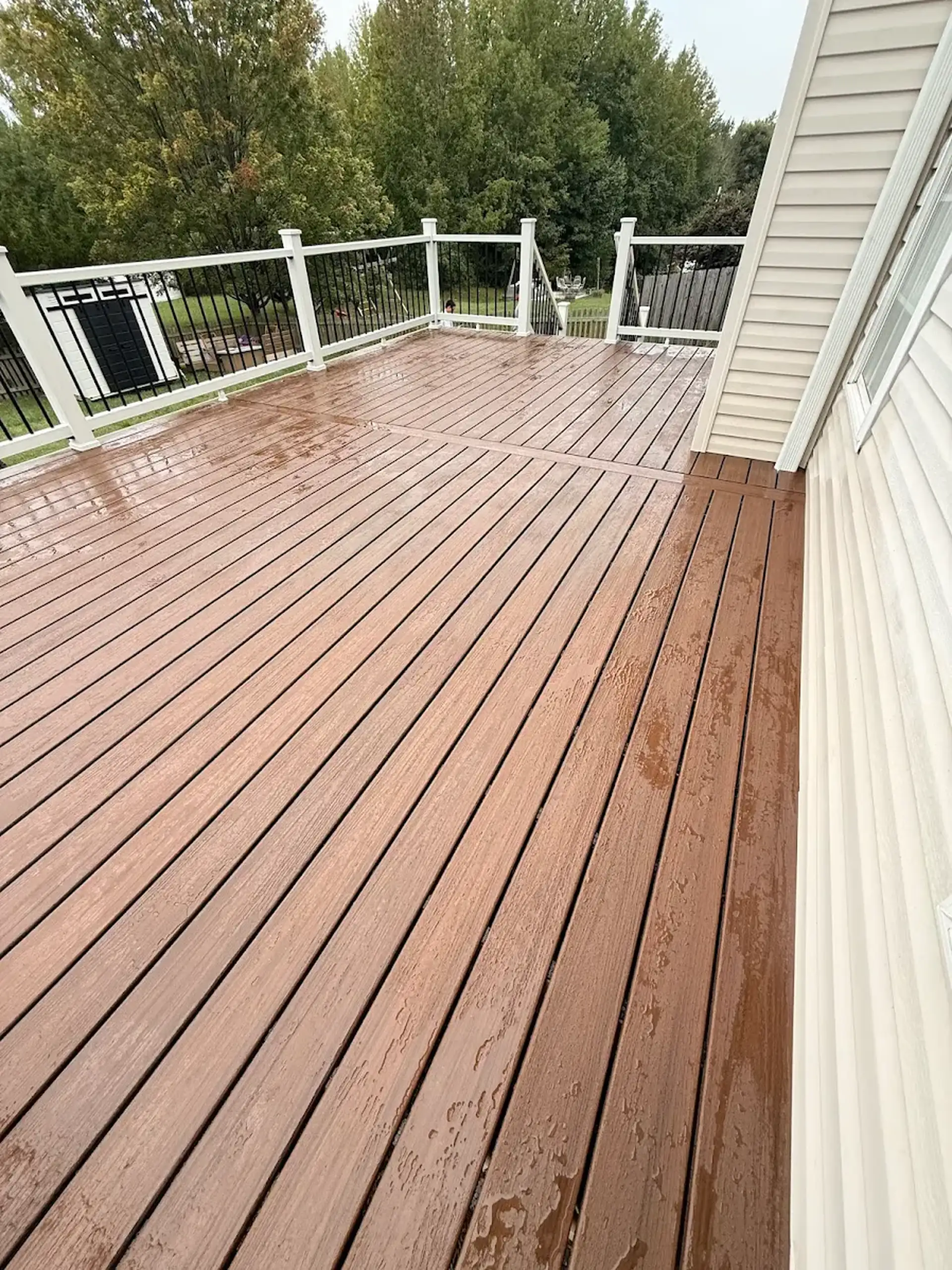
The question, “Is composite decking slippery in winter?” is valid, as any surface, including wood, concrete, and composite decking, can become slick due to ice and snow accumulation.
How to Avoid Slippery Decks in Winter
Slipperiness is mitigated primarily by surface texture and maintenance:
- Textured Boards: High-quality capped composites feature anti-slip embossing or deep grain patterns that retain traction when wet.
- Proper Drainage: The deck should be installed with a slight slope (about 1/8 inch per foot) to help water drain away, minimizing standing water that can freeze.
- Regular Cleaning: Regularly sweeping leaves, debris, and moss prevents the accumulation of organic matter, which can hold moisture and create a slick layer, particularly dangerous when freezing.
Safety Considerations for Winter Deck Use
For safety, use a secure, non-damaging ice melt:
- Safe De-Icers: Calcium chloride and calcium magnesium acetate (CMA) are generally safe for most composite decking.
- De-Icers to Avoid: Do not use rock salt (sodium chloride) or harsh chemicals, which can leave a residue, pit the surfaces, or potentially void the deck’s warranty.
- After Use: Spread de-icers sparingly, and sweep away any excess after the ice has melted.
Best Deck Material for Snow and Cold Weather
Composite Decking: The Ideal Material for Winter
Composite decking is consistently recommended as the best deck material for snow and cold weather due to its comprehensive protective design. By avoiding moisture absorption, it sidesteps the rot, warping, splintering, and decay that plague wood decks in climates with heavy snow and constant temperature fluctuation.
Other Material Considerations for Winter Decks
While composite is the top choice, other materials have varying performance:
- PVC Decking: Offers the ultimate resistance to water and freeze-thaw cycles, making it a stellar option for extreme northern regions.
- Pressure-Treated Wood: Is prone to cracking and splintering from freeze damage and requires regular maintenance (sealing/staining) to withstand winter. It is generally not recommended as the best long-term solution for a severe cold.
Why Choose Composite Decking for Your Winter Deck Project?
Choosing composite decking for a cold climate means investing in a deck that requires minimal upkeep and maintains its structural integrity year-round. It avoids the annual sanding, staining, and painting required by wood, allowing you to sweep snow off the deck without worry.
The durability and manufacturer warranties (up to 50 years) mean your outdoor space will be ready for use as soon as the weather warms up.
Frequently Asked Questions
Is Trex or TimberTech better?
Both Trex and TimberTech are industry leaders in composite decking. Trex is known for its high recycled content (95%) and wide range of affordable tiers. At the same time, TimberTech often emphasizes superior scratch and stain resistance and offers a premium PVC option (AZEK) with a lifetime warranty and a full-polymer cap on all four sides. For extreme moisture/cold, the TimberTech AZEK PVC line is often preferred.
Can composite decking be installed in winter?
Yes, composite decking can be installed in winter. Key considerations include allowing the material to acclimate to the cold and leaving adequate expansion gaps according to manufacturer specifications.
What is the best deck material for winter?
Capped composite decking or PVC decking is the best material for winter. Both resist moisture absorption, which prevents the cracking and warping caused by the freeze-thaw cycle that affects natural wood.
Is Trex slippery in the winter?
Any deck surface can be slippery when ice and snow accumulate. However, Trex boards are manufactured with surface textures and anti-slip features to improve traction when wet. Promptly clearing snow and ensuring good drainage are the best ways to keep the surface safe.
How many years will composite decking last?
High-quality composite decking is backed by warranties ranging from 25 to 50 years, depending on the product line and brand.
Should I shovel snow off my composite deck?
Yes, you should shovel snow off your composite deck. Use a plastic shovel, never a metal one, to avoid scratching or damaging the board’s cap surface.
How can I prevent composite decking from getting icy?
To minimize icing:
- Ensure the deck has proper drainage (a slight slope) to prevent standing water from freezing.
- Regularly sweep off debris, leaves, and organic growth (algae/mildew) that hold moisture.
- Apply safe de-icers like calcium chloride or calcium magnesium acetate (CMA).
Will ice melt damage composite decking?
Ice melts like calcium chloride and CMA are safe for most composite decking. Avoid rock salt (sodium chloride) and harsh chemicals, as they can leave residue or cause surface pitting.
Why Choose Prince William Home Improvement for Your Composite Deck?
As a trusted deck contractor in the Virginia and Maryland region, Prince William Home Improvement, one of the deck contractors Northern Virginia homeowners trust, understands the local building codes, soil conditions, and aesthetic preferences unique to the area.
- TrexPRO® Platinum Certification: We hold the highest possible status from Trex, ensuring our installers are experts proficient in all technical requirements, including the critical 16-inch on-center (O.C.) joist spacing needed to prevent sagging.
- Industry-Recognized Expertise: As members of the North American Deck and Railing Association (NADRA) and recipients of national recognition, such as the Remodeling 550 and Exterior 200 awards, we commit to the highest standards of safety and quality.
- Support & Warranties: We honor Trex’s exceptional warranties and stand behind the quality of our installation with our own labor guarantee.
- Budgeting Assistance: Explore our flexible financing options to help budget the high upfront cost of Trex decking installed.
Contact Prince William Home Improvement to leverage our experience and receive a free, precise, customized consultation for your new composite deck project today!