


Dreaming of a new deck but worried winter will put your plans on ice? Think again! Building a deck when temperatures drop is a strategic move that offers unexpected advantages. Instead of facing long spring waiting lists, starting now means you can benefit from increased contractor availability and faster permit approvals during the off-season.
We’ll dive into the precise technical methods—from managing concrete curing in the cold to calculating frost line depths—that professional builders use to ensure your new deck is structurally sound and ready for immediate enjoyment the moment spring arrives.
Don’t delay your outdoor oasis; let’s uncover how you can beat the rush and realize your vision sooner. Keep reading for the complete breakdown!
Understanding the Impact of Cold Weather on Deck Building
Winter conditions bring a unique set of factors to deck construction that differ from warmer seasons. The temperature, moisture levels, and ground stability all play a role in how a deck project unfolds. Understanding these impacts helps in proper planning and execution, leading to a successful build regardless of the mercury.
Challenges of Building a Deck in Winter
Building a deck when it’s cold presents specific hurdles that require careful consideration and planning. Professional builders mitigate these challenges through specialized techniques:
| Challenge | Impact on Project | Professional Mitigation Strategy |
| Frozen Ground & Excavation | Digging footings is labor-intensive and slower. | Requires specialized equipment, ground-thawing techniques, or drilling with helical piers. |
| Material Handling | Certain adhesives/sealants fail; wood becomes brittle. | Requires temperature-specific adhesives and fasteners; materials must be carefully pre-drilled. |
| Worker Comfort & Productivity | Colder temperatures slow down manual tasks and decrease efficiency. | Requires strict safety protocols, appropriate cold-weather gear, and scheduling for shorter, productive shifts. |
| Shorter Daylight Hours | Limits working hours per day, impacting project flow. | Requires careful scheduling and strategic use of site lighting to maximize safe working time. |
Advantages of Building a Deck in the Winter
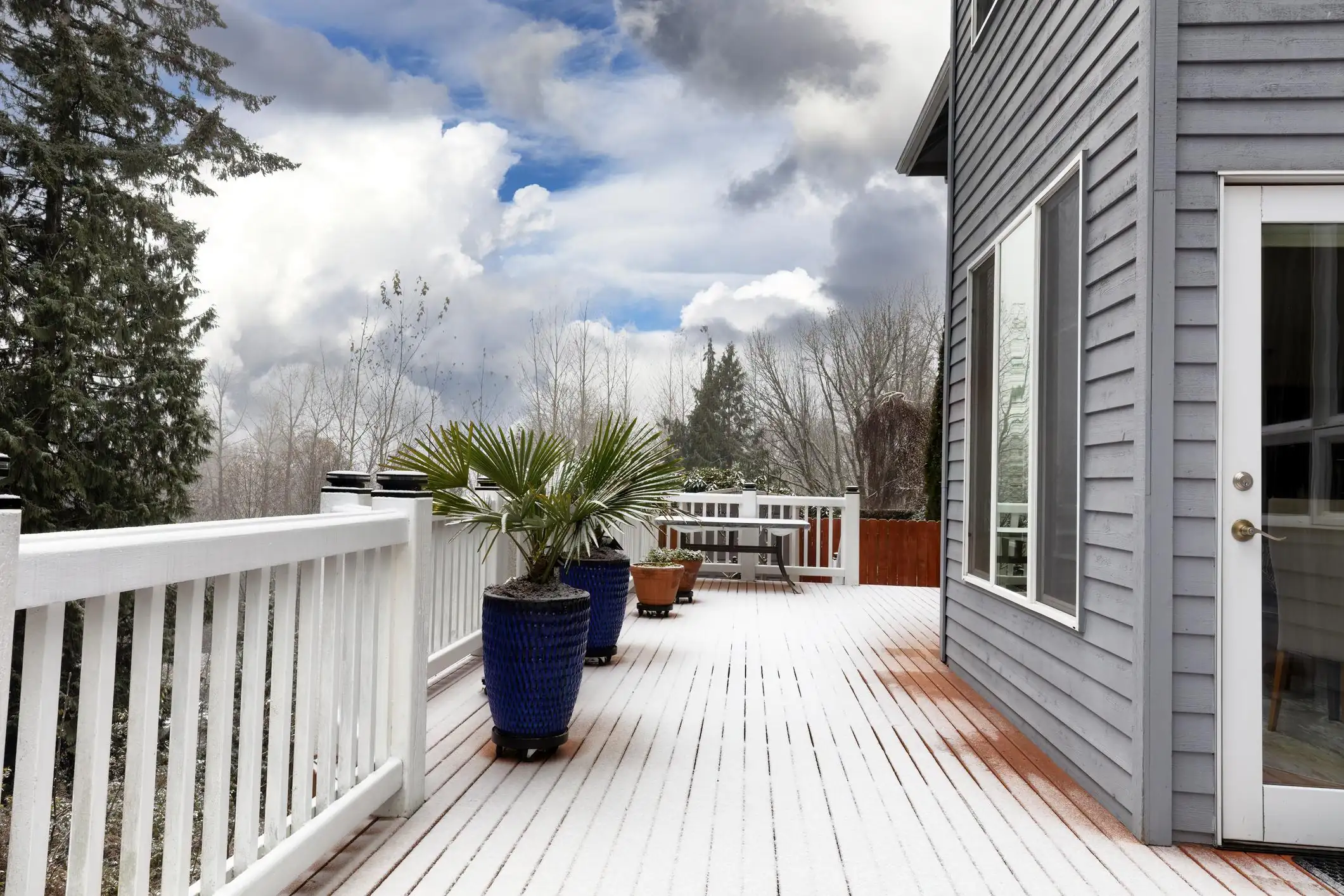
Despite the challenges, constructing a deck in the winter offers distinct benefits that can make it a favorable time for your project.
- Contractor Availability: Deck builders often have greater availability in winter, allowing them to start projects sooner and reducing the waiting times common in peak seasons.
- Faster Permitting: Local building departments often have lighter workloads during the winter months, potentially leading to quicker permit and inspection processing.
- Reduced Material Lead Times: Suppliers might have better stock levels and shorter delivery times for decking materials, as demand is typically lower than in spring or summer.
- Landscaping Impact: Building during winter minimizes disturbance to your active landscaping, as many plants are dormant.
Best Time of Year to Build a Deck
The best time to start your deck project depends on whether you prioritize ideal working conditions or strategic project timing:
| Season | Primary Advantage | Critical Hurdle | Strategic Gain |
| Spring & Summer | Optimal heat and daylight for material setting and accelerated chemical processes. | Peak-demand market saturation leads to gridlock in the schedule and material price volatility. | Maximum material strength development and installation time. |
| Fall & Winter | Optimized off-season resource allocation and guaranteed contractor focus. | Frozen ground requires specialized excavation; cold weather mandates an extension of concrete curing time. | Project completion secured before the spring rush for immediate seasonal enjoyment. |
How Weather Affects Deck Construction Throughout the Year
Every season has its nuances for deck construction.
- Spring: Thawing ground can introduce moisture challenges, though temperatures are suitable for most materials.
- Summer: Ideal for curing and drying, but high heat can affect worker comfort and material handling for some composite products.
- Fall: Generally, mild temperatures are good, but shorter days and increasing rainfall need consideration.
- Winter: Frozen ground and cold can impact concrete work, but dry, cold days are excellent for framing and installation if precautions are taken.
What to Consider Before Building a Deck in Winter
Ground Conditions and Frost Depth
Assessing ground conditions before digging is paramount to structural integrity:
- The Frost Line: This is the critical factor. Footings must extend below the local frost line—the maximum depth to which soil freezes.
- Structural Risk: Footings installed above the frost line are susceptible to frost heave, where freezing moisture in the soil expands, lifting and causing significant structural damage to the deck.
- Professional Planning: Builders determine the precise local frost depth and plan footings accordingly, which may require deeper excavation or specialized pier systems.
Material Selection for Winter Deck Construction
Some decking materials are better suited for cold-weather installation than others.
- Wood: Pressure-treated lumber, cedar, and redwood are generally robust in cold. However, extreme cold can make wood brittle, requiring careful cutting and fastening.
- Composite Decking: Many composite brands are formulated to perform well. It is important to select products explicitly rated for cold weather, as some may become rigid or harder to work with in cold weather.
- Adhesives and Fasteners: Specific screws, nails, and adhesives designed for cold-weather application are required to ensure proper adhesion and structural integrity.
Workmanship and Tools for Cold-Weather Deck Construction
Skilled workmanship is even more important in winter to account for cold-related factors:
- Tool Performance: Batteries for power tools drain faster in the cold. Air compressors for nail guns can be affected, requiring backup equipment.
- Safety Protocols: Icy conditions, shorter daylight, and cold temperatures necessitate strict safety protocols to prevent accidents.
- Quality Control: Experienced crews account for material expansion and contraction in low temperatures, including pre-drilling holes to prevent splitting.
How to Prepare for Building a Deck in Winter
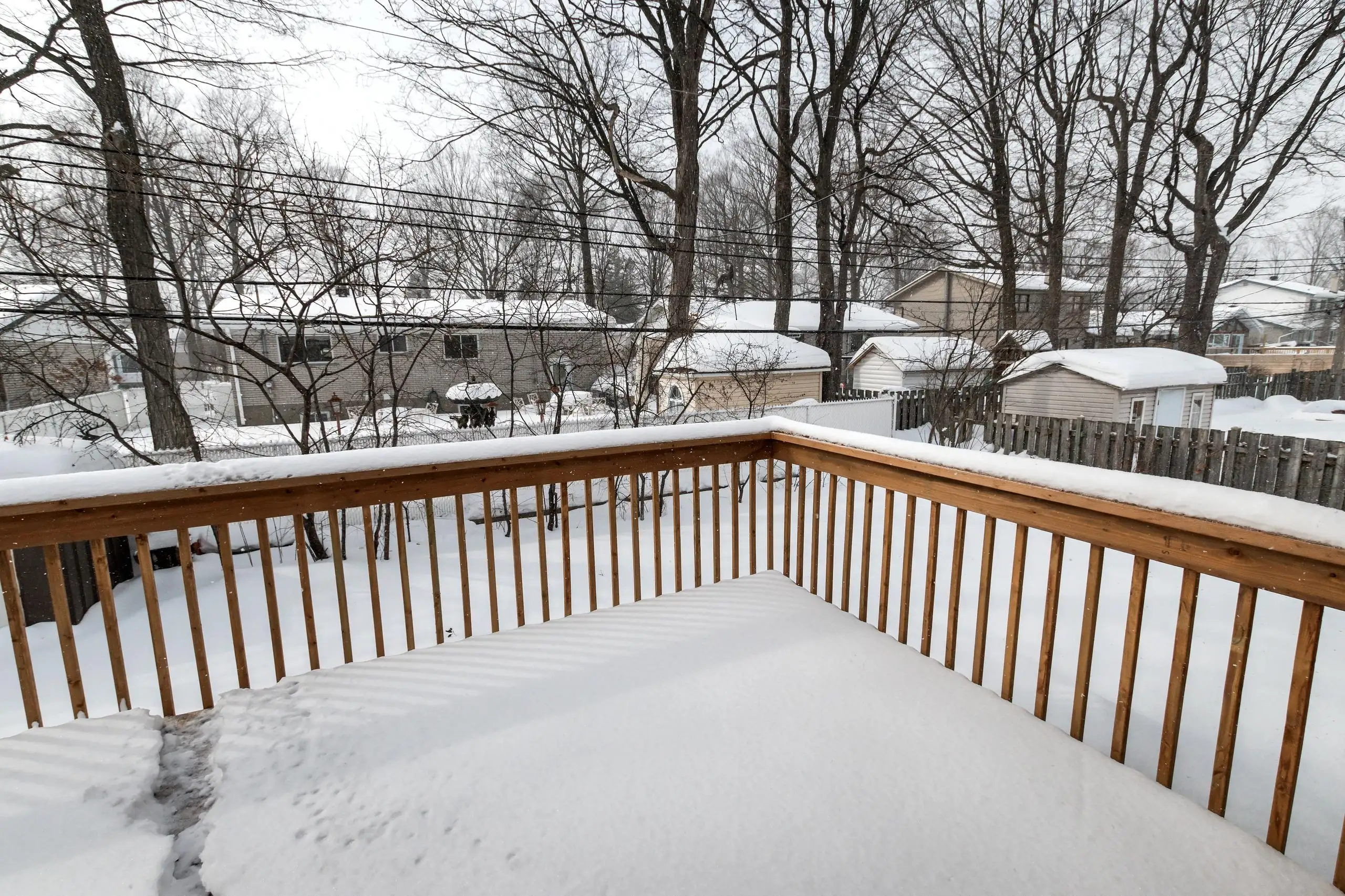
Preparing the Ground for Deck Footings in Cold Weather
Proper ground preparation ensures footings cure correctly and maintain stability:
- Site Clearing: Removing snow and ice from the construction area is the first step.
- Ground Thawing: If the frost is too deep, specialized equipment might be used to thaw the ground, or alternative footing solutions like helical piers can be employed.
- Concrete Insulation: Freshly poured concrete footings are insulated or heated to help them cure properly in cold temperatures, preventing freezing before they gain sufficient strength.
What to Expect During Winter Deck Construction
During winter construction, adaptation is key:
- Shorter Workdays: Expect reduced daily working hours due to limited daylight.
- Periodic Pauses: Work may pause during extreme weather events (heavy snow or ice storms) for safety.
- Site Management: The site may also need to be cleared of snow periodically to maintain access and safety.
- Communication: Openly discuss the schedule and any weather-related adjustments with your contractor.
How to Care for Deck Materials in Cold Weather
Materials stored on site need protection from extreme elements.
- Storage: Lumber and composite boards should be stored off the ground, covered, and protected from moisture to prevent warping, freezing, or ice buildup.
- Handling: Materials should be handled carefully, as some might be more brittle in the cold.
- Installation Practices: Builders follow manufacturers’ specific cold-weather installation guidelines, which may include allowing for greater expansion/contraction gaps.
Do You Need a New Deck Built? Winter Might Be the Perfect Time
Strategic Advantages of Starting Your Deck Project in Winter
Initiating your deck project in winter provides a strategic advantage that converts into time and cost efficiencies:
- Beat the Rush: Bypass the long waiting lists from spring and secure your contractor’s immediate attention.
- Ready for Spring: Your deck will be complete and ready for enjoyment the moment warm weather arrives.
- Cost Efficiency: Contractors seeking steady work often offer more competitive pricing during the slower season.
- Reduced Delays: Faster permit processing can prevent costly construction delays.
Technical Data Snapshot: Key Winter Metrics
Professional builders use specific metrics to ensure structural integrity and scheduling efficiency during winter deck construction:
Structural Integrity Requirements
- Footing Depth: Building codes require footings to extend at least 12 inches below the local frost line to prevent structural damage from frost heave. In northern regions, this mandates a minimum footing depth of 30 to 48 inches.
- Concrete Curing Time: Concrete requires a minimum temperature above 50° for optimal strength. In colder conditions, the curing time for footings and piers is often extended by 50% to 100% compared to summer conditions, necessitating the proper use of insulating blankets or heating pads.
- Material Gaps: Builders must adjust the required gap between deck boards during winter installation. This prevents warping and buckling by accommodating the material’s expansion when temperatures return.
Scheduling & Financial Metrics
- Contractor Availability Shift: Contractor availability typically increases by 30% to 50% during the late fall and winter seasons compared to peak spring/summer months, allowing for significantly faster project starts.
- Return on Investment (ROI): A quality deck yields a strong ROI, often recovering 65% to 80% of the cost upon resale, depending on the material selected (composite usually yields a higher return than treated wood).
Frequently Asked Questions
1. Can you build a deck in the cold?
Yes, building a deck in cold weather is possible with proper planning and specialized techniques. Experienced contractors know how to manage challenges such as frozen ground, material handling in low temperatures, and ensuring concrete footings cure properly.
2. Can you build a deck when the ground is frozen?
Yes, it is possible to build a deck when the ground is frozen. However, it requires specific approaches such as using heavy excavation equipment, ground-thawing techniques, or installing helical piers that can be drilled into frozen soil below the frost line.
3. Do contractors build decks in the winter?
Many professional deck contractors build decks in the winter. This off-peak season often offers benefits such as greater contractor availability, potentially quicker permit processing, and shorter material lead times.
4. Can you pour deck footings in the winter?
Yes, deck footings can be poured in the winter. It requires precautions such as heating the concrete mix, using accelerants, and insulating the freshly poured footings to ensure proper curing and prevent freezing before the concrete gains sufficient strength. Footings must always extend below the frost line.
5. Is it cheaper to build a deck in the winter?
Building a deck in the winter can sometimes be more cost-effective. Contractors may offer more competitive pricing to maintain steady work during their slower season, and faster permit processing can prevent costly delays. Material costs might also be more stable due to lower demand.
6. Do decks need frost footings?
Yes, most decks require frost footings. Building codes typically require deck footings to extend below the local frost line to prevent frost heave. Frost heave occurs when soil moisture freezes and expands, which can lift and damage the deck structure if the footings are not deep enough.
Why Choose Prince William Home Improvement for Your Deck Building Needs
When considering a deck project, especially in winter, your builder’s expertise is paramount. Prince William Home Improvement has extensive experience in constructing durable, high-quality decks that stand the test of time and weather.
Our team is well-versed in cold-weather construction techniques, ensuring your project meets the highest standards year-round.
We handle every aspect of your deck project with precision:
- Expert Deck Enclosures: Offering custom roofing solutions and durable wall systems that protect against winter elements.
- Composite Decks: Specializing in composite decks that offer longevity and low maintenance in all climates.
- Custom Decks: Designing custom decks that harmonize with your home’s exterior and provide lasting value.
- Flexible Financing: Explore our financing options to help make your dream deck a reality.
- Comprehensive Warranties: Backing our work with robust warranties for your confidence.
We deliver structures that protect your investment and expand your usable living area.
Request your free project consultation to explore how we can create a comfortable, functional outdoor haven for you this winter!