


Consider upgrading your backyard with a new deck. You’ve landed on the eternal question: composite vs wood deck. We know you want the scoop on durability, looks, upkeep, and, most importantly, the bottom line. Before you spend a dime, grab a coffee and settle in. We’ve done the deep dive into composite decking vs wood cost, maintenance, and performance so you can figure out exactly which material is right for your home and budget in 2026.
This comprehensive guide breaks down the qualities of composite decking vs wood to help you make an informed investment. Let’s compare the good, the bad, and the practical realities of a wood deck vs composite deck.
The Case for Composite: Low Upkeep and Resilience
The composite decking market is experiencing robust growth, forecast to expand at a compound annual growth rate of around 16% in the coming years, driven largely by residential demand for durable, low-maintenance surfaces.
- Rot and Pest Immunity: Unlike pressure-treated wood, composite decking does not require chemical preservatives. They are impervious to rot, mold, and wood-boring insects.
- Freedom from Sanding: Composite materials never require stripping, sanding, or staining. Maintenance is typically limited to simple soap-and-water cleaning.
- Long-Term Assurance: Composites generally come with outstanding warranties, often spanning 25 years or more, offering protection for your investment.
- No Splinters: The surface stays smooth, making it safer for bare feet.
The Realities of Wood vs Composite: Drawbacks to Consider
While composites are appealing, they aren’t without their drawbacks. Understanding the disadvantages of composite decking vs wood is crucial before buying.
| Factor | Composite Decking Drawbacks | Wood Decking Drawbacks |
| Initial Price | Substantially higher material cost upfront. | Requires more money and time over the material’s life for refinishing. |
| Appearance | Aesthetic is a simulation; it may not satisfy purists who value real wood grain. | Prone to color change (greying) and splitting unless perfectly maintained. |
| Temperature | Can absorb and retain high heat under direct sunlight. | Requires chemical treatment (pressure-treated) or expensive hardwood (Ipe) to resist decay. |
Wood Deck vs Composite Deck: Surface Aesthetics
The look and touch are significant factors when deciding on a new outdoor space.
Natural vs. Uniform Color
- Wood: Offers an authentic, natural aesthetic. Materials like cedar, redwood, or premium ipe wood vs composite decking provide rich, unique grain patterns. Wood’s color will naturally grey unless regularly stained.
- Composite: Available in a vast array of colors and finishes designed to mimic natural wood grain. The appearance is highly consistent, which can be a plus for uniformity.
Decoding Material Types: From Treated Wood to PVC
Decking materials vary widely, impacting cost and longevity. The market shows that capped composites accounted for over 58% of the composite market share in 2024 due to their superior resistance.
- Pressure Treated Wood: Economical material where chemicals are forced deep into the lumber to resist decay. Requires regular staining.
- High-End Hardwoods: Like ipe wood vs composite decking, these are naturally dense, durable, and beautiful, but come at a high cost and still require oiling to retain color.
- Capped Composite: Features a full protective shell (capping) around all four sides. This provides the best defense against fading, scratching, and moisture.
- PVC (Cellular Plastic) Decking: This material contains no wood fibers. It tends to be lighter than wood-plastic composites and often performs better at keeping cool under high temperatures.
Performance Face-Off: Strength, Weight, and Temperature
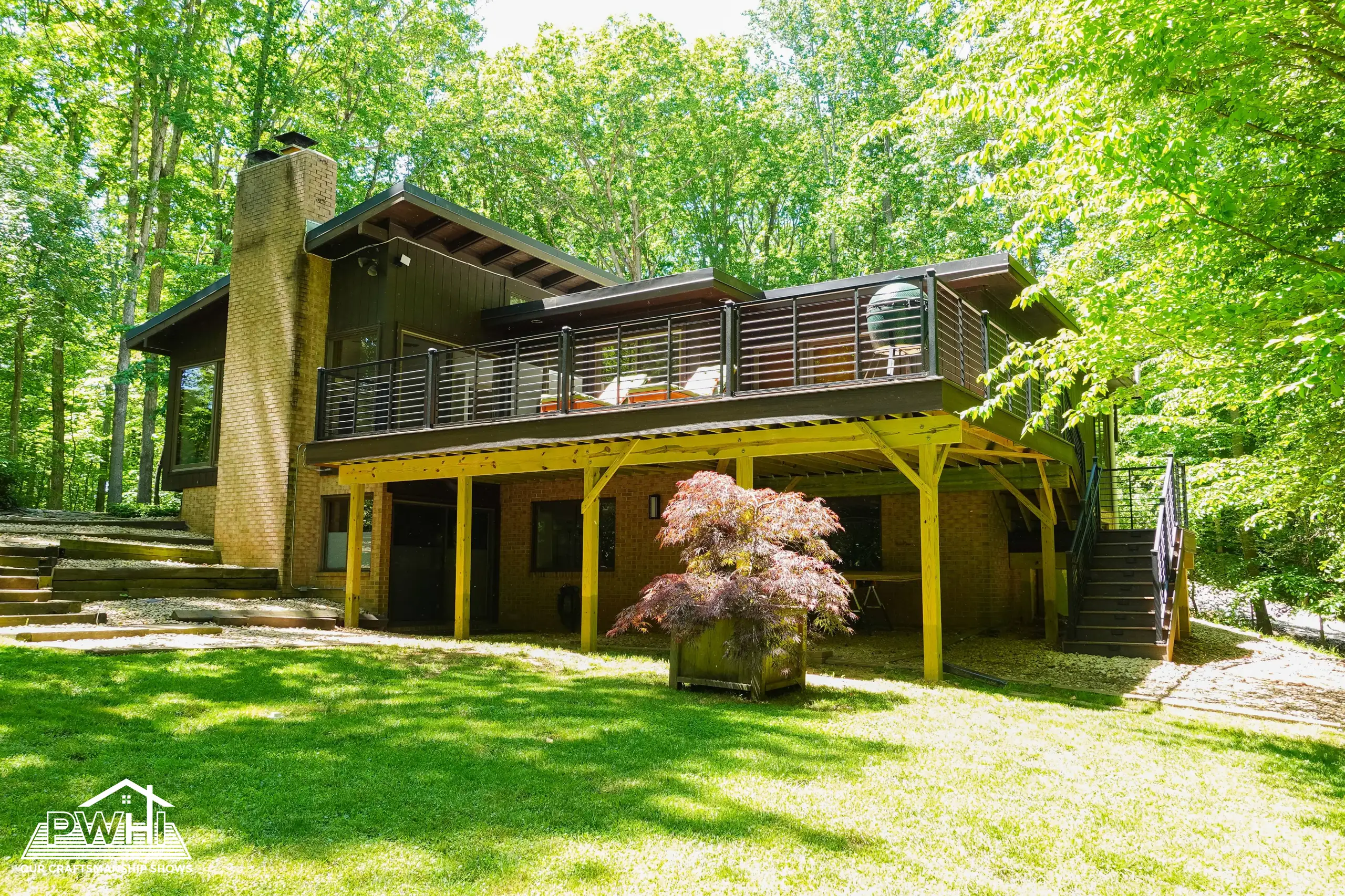
We compare the physical properties of the materials.
Comparison Table: Strength and Weight
When comparing the strength of composite decking vs wood, the key terms are stiffness and load capacity. Wood generally has higher instantaneous strength, but composite maintains its strength better over decades.
| Property | Composite Decking | Wood Decking (Typical) |
| Structural Stiffness (MOE) | Lower, often around 200,000 psi (pounds per square inch). | Higher, often 400,000 psi or more (e.g., Douglas Fir or Yellow Pine). |
| Max Load Strength (MOR) | High-quality capped composites typically 3,500 to 4,500 psi. | Higher, often exceeding 7,000 psi (for dense, treated lumber). |
| Joist Spacing Requirement | Shorter span: typically 12 inches on center (O.C.) due to material flexibility. | Longer span: typically 16 inches on center (O.C.) due to higher stiffness. |
| Long-Term Integrity | Strength remains constant mainly over 25+ years (no decay). | Strength degrades rapidly without constant sealing/maintenance (rot risk). |
Weight and Density
The weight of composite decking vs wood impacts handling and the substructure requirements.
- Composite: Dense material, generally weighing 20% to 50% more per linear foot than standard softwood lumber. This density contributes to stability but requires a sturdy understructure.
- Wood: Varies significantly. High-grade hardwoods like Ipe are extremely dense (up to 70 lbs/ft3), while standard pressure-treated pine is much lighter when dry.
Heat & Cold: How Composite Deck vs Wood React
A significant concern is whether composite decking gets hotter than wood. The Mid-Atlantic climate of Maryland or Virginia, with its hot, humid summers and freeze-thaw cycles, places unique stress on deck materials.
- Heat: Dark-colored composites can retain heat intensely, reaching surface temperatures of up to 140°F. Newer “cool-touch” composite and PVC materials are specifically engineered to stay 20°F to 30°F cooler than standard composites.
- Cold: Composites are engineered for stability, offering reduced expansion and contraction in response to temperature changes, which minimizes the risk of damage from freeze-thaw cycles standard in the region.
Fire Resistance: Is Composite Decking vs Wood Safer?
The question “Is composite decking vs wood fire resistant?” is complex and depends on the specific product.
- Wood: All wood is naturally combustible. It will ignite and burn.
- Composite: Many modern composite brands now offer specific lines with a Class A flame spread rating, making them highly fire-resistant. If fire safety is a priority, seek Class A certified products.
Composite Deck Boards vs Wood: Installation and Maintenance Commitment
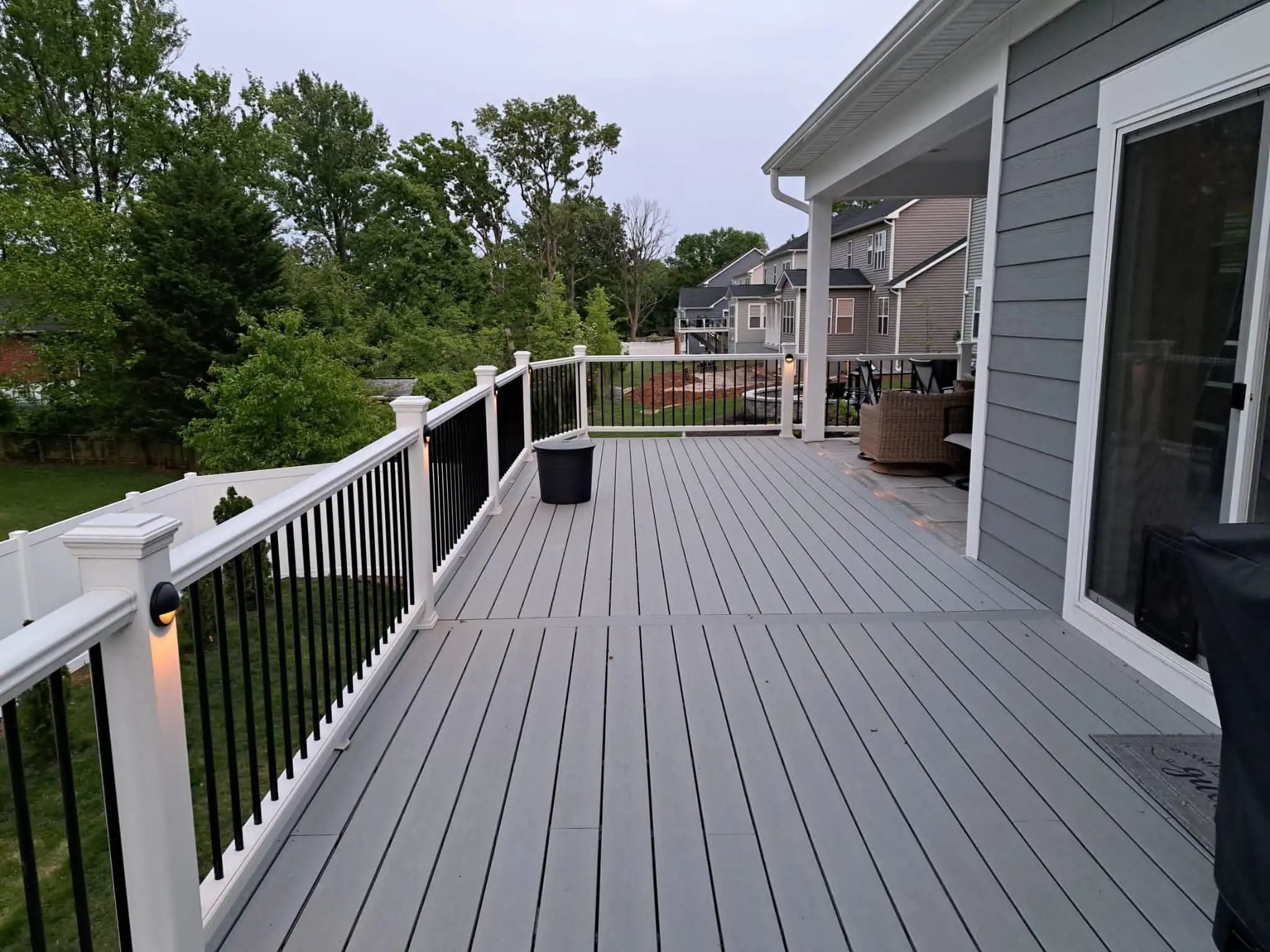
The final choice often comes down to the commitment required after installation.
Upkeep and Effort
| Task | Composite Deck Boards | Wood Deck Boards |
| Initial Installation | Easier due to the uniform shape and available hidden-fastener systems. | More difficult due to potential warping and the need for face-screwing. |
| Maintenance | Low: only simple scrubbing/cleaning. | High: requires regular sanding, staining, sealing, and power washing. |
| Repair | Individual composite deck boards vs wood are replaceable, though color matching can be complex. | Individual boards are easily replaceable, but a new wood color won’t match the old. |
Environmental Impact: Source vs. Waste
- Wood: Sourced from natural, renewable resources. Look for responsibly managed (FSC certified) lumber.
- Composite: Made from a mix of reclaimed wood fiber and recycled plastics, diverting waste from landfills. Some leading manufacturers report up to 95% recycled content. They are considered non-recyclable after their lifespan due to the mixed materials.
FAQs
How much does composite decking cost vs wood in 2026?
Generally, composite decking material costs significantly more upfront. In 2026, material costs for premium composite decking vs wood costs can be 2 to 4 times higher than pressure-treated wood. However, when you factor in the long-term cost of wood maintenance (stain, sealant, labor, replacement boards) over 20 years, the total cost of ownership for a composite deck is often comparable to, or even lower than, a wood deck.
Is composite decking worth the higher upfront cost?
For most homeowners, yes. The worth of composite decking lies in the time and money saved by eliminating the need for sanding, staining, and sealing every few years. While wood decks in Maryland may show a slightly higher ROI percentage (around 83% vs. 77% for composite), composite decks often return a greater absolute dollar value (approx. $800 more), making the investment attractive for long-term ownership.
Does composite decking get hotter than wood?
Yes, generally, composite decking materials, especially those in darker colors, absorb and retain heat more than natural wood. This can make them uncomfortably hot to walk on barefoot under direct summer sunlight. Lighter-colored, capped composite decking planks and PVC materials are designed to mitigate this issue.
Can composite decking catch fire more easily than wood?
It depends on the product. Standard wood is naturally flammable. However, many modern composite brands now offer specific lines with a Class A flame spread rating, making them more fire-resistant than standard lumber. If fire resistance is a priority, choose a brand with a Class A certification.
Which lasts longer—wood or composite decking?
Composite decking typically lasts longer. 14 Most major composite brands offer warranties ranging from 25 to 50 years, and the material itself is immune to rot and insect damage. Wood, even ipe wood vs composite decking (a very durable hardwood), requires diligent maintenance to prevent rot and structural degradation, and generally needs replacement sooner.
Is composite decking slippery when wet?
The slip resistance of composite decking varies by brand and surface finish. Higher-quality, capped composites often have textured surfaces designed to provide good traction. Wood can also become slippery when wet, especially if covered in mold or mildew, requiring regular cleaning.
Can composite decking be painted or stained like wood?
No, composite decking cannot typically be painted or stained like wood. The surface is designed to resist fading and is often non-porous. Stains or paints may not adhere properly and could void the manufacturer’s warranty. The color you purchase is the color you keep.
Which Should You Choose?
The debate over wood deck vs composite deck is a choice between initial savings and long-term convenience.
- Go with Wood if your budget is tight, you love the natural look, and you are willing to commit to regular maintenance (staining, sealing, repairing) every 1–3 years. Pressure-treated wood vs composite decking is the most affordable alternative.
- Go with Composite if you want the lowest possible maintenance, a deck that lasts decades without needing upkeep, and you have the budget for a higher upfront cost. Look for capped, lighter-colored boards to minimize heat issues.
Let’s Discuss Your Deck Project
Selecting the right material for an outdoor surface is a big decision. We can help clarify details on pricing, installation, and which product performs best where you live, especially given the unique climates of Maryland and Virginia. Get guidance from a professional who understands deck materials.
Connect With An Expert For A Discussion About Your Deck Project Now!