


Don’t let winter turn your patio into a frozen wasteland. It’s time to give that outdoor space a year-round job by putting a roof and walls on it! This guide shows you how to choose the perfect enclosure—from flexible, crystal-clear vinyl curtains to permanent, sunroom-style additions—and how to trick it out with infrared heat, mood lighting, and cozy throws. The result?
A protected, usable, all-weather escape perfect for hosting board game nights or just sipping coffee while watching the snow fall. Plus, you’ll prevent ice damage and seriously boost your home’s value!
Read the complete guide for details on heating types, structural requirements, and winterizing tactics!
Patio Enclosures Ideas for Winter
Extending your patio’s usability through the colder months significantly expands your home’s functional square footage. An enclosure provides a protected microclimate, allowing continued enjoyment of an outdoor setting while reducing maintenance requirements.
Once your patio or deck is enclosed, the space transforms into a versatile winter room. These creative ideas focus on maximizing comfort and utility during the cold months:
Lighting and Ambiance: Combating the Short Days
Strategic lighting is essential for creating a warm, inviting atmosphere during short daylight hours.
- Layered Lighting: Combine overhead recessed lighting (Ambient) with floor lamps (Task) for reading. Wrap string lights around support posts or railings for a festive, soft glow.
- Fire Focal Points: Place a ventless gas fireplace, wood-burning chiminea, or tabletop fire tray (with strict adherence to ventilation rules) as a centerpiece for warmth and ambiance.
- Lanterns/LED Candles: Cluster lanterns of varying sizes on side tables or ledges. Use battery-operated LED candles for safety within enclosures.
Furnishings and Climate Zones
Define the space using materials and placement to maximize warmth and function.
- Insulated Comfort: Layer weather-resistant furniture with heavy fleece throws and insulated throw pillows to trap body heat when temperatures drop.
- Heating Materials: Incorporate heated outdoor rugs to eliminate cold spots underfoot, especially on concrete or tile.
- Aesthetic Integration: Introduce seasonal greenery, such as small conifers or boxwood, to maintain a connection to nature.
Activity and Utility Extensions
An enclosed space allows for indoor-style activities while still enjoying the natural view.
- Winter Culinary Station: Utilize the space for warm, interactive cooking. Set up an outdoor grill or pizza oven near the enclosure (with external venting only) for winter cooking without facing the cold.
- Entertainment Hub: Install a weatherproof TV screen (if the enclosure is fully sealed) or set up a large table for board games and puzzles to create a protected family retreat.
- Hobby Retreat: Utilize the natural light for projects, painting, or reading, turning the space into a productive, serene work zone.
Why Enclose Your Patio for Winter?
Extending your patio’s usability through the colder months significantly expands your home’s functional square footage. An enclosure provides a protected microclimate, allowing continued enjoyment of an outdoor setting while reducing maintenance requirements.
- Weather Defense: Shields the area from freezing temperatures, harsh winds, and heavy precipitation.
- Structural Preservation: Protects outdoor furnishings and surrounding landscaping from winter damage.
- Comfort Extension: Creates a comfortable space for dining or relaxation despite external conditions.
Different Types of Patio Enclosures for Winter

Patio enclosures offer various levels of protection and commitment. The choice depends on desired permanence and budget.
| Enclosure Type | Wall Material | Level of Protection | Example Application |
| Permanent Structure | Insulated Panels, Glass Walls | Highest (Creates a New Room) | Sunrooms, fully integrated porch additions. |
| Semi-Permanent | Rigid Aluminum Frames with Vinyl Inserts | High (Seasonal wind/rain block) | Screen rooms retrofitted with removable windows. |
| Retractable Systems | Clear Marine-Grade Vinyl Curtains | Moderate (Wind block, solar heat trap) | Vertical roll-down curtains, motorized track systems. |
Temporary Patio Enclosures for Winter
Temporary solutions are designed for easy deployment and removal, offering seasonal shelter without major construction.
- Clear Vinyl Curtains/Panels: Custom-fabricated, heavy-gauge vinyl panels that attach to existing frames via snaps or tracks, providing high visibility and blocking wind.
- Modular Panel Systems: Lightweight, pre-fabricated frames fitted with clear polycarbonate or vinyl, which interlock to form temporary, rigid walls.
- Heavy-Duty Tarps/Awnings: Reinforced, winter-grade covers provide simple overhead protection from snow when secured properly.
Patio Heating Options for Winter
Even with enclosure, supplemental heating is needed for true cold-weather comfort.
| Heating Type | Method | Description | Key Requirement |
| Electric | Infrared Radiant Heaters | Heats objects and people directly; highly effective and efficient in enclosed or semi-enclosed spaces. | Proper electrical wiring and placement. |
| Gas | Propane or Natural Gas Heaters | Provides widespread, sustained warmth (e.g., mushroom-style patio heaters, built-in units). | Strict ventilation to prevent carbon monoxide buildup. |
| Combustion | Gas Fire Pits or Fireplaces | Provides ambiance and significant heat; requires non-combustible surrounds. | Venting system required within any enclosure. |
How to Enclose a Deck for Winter
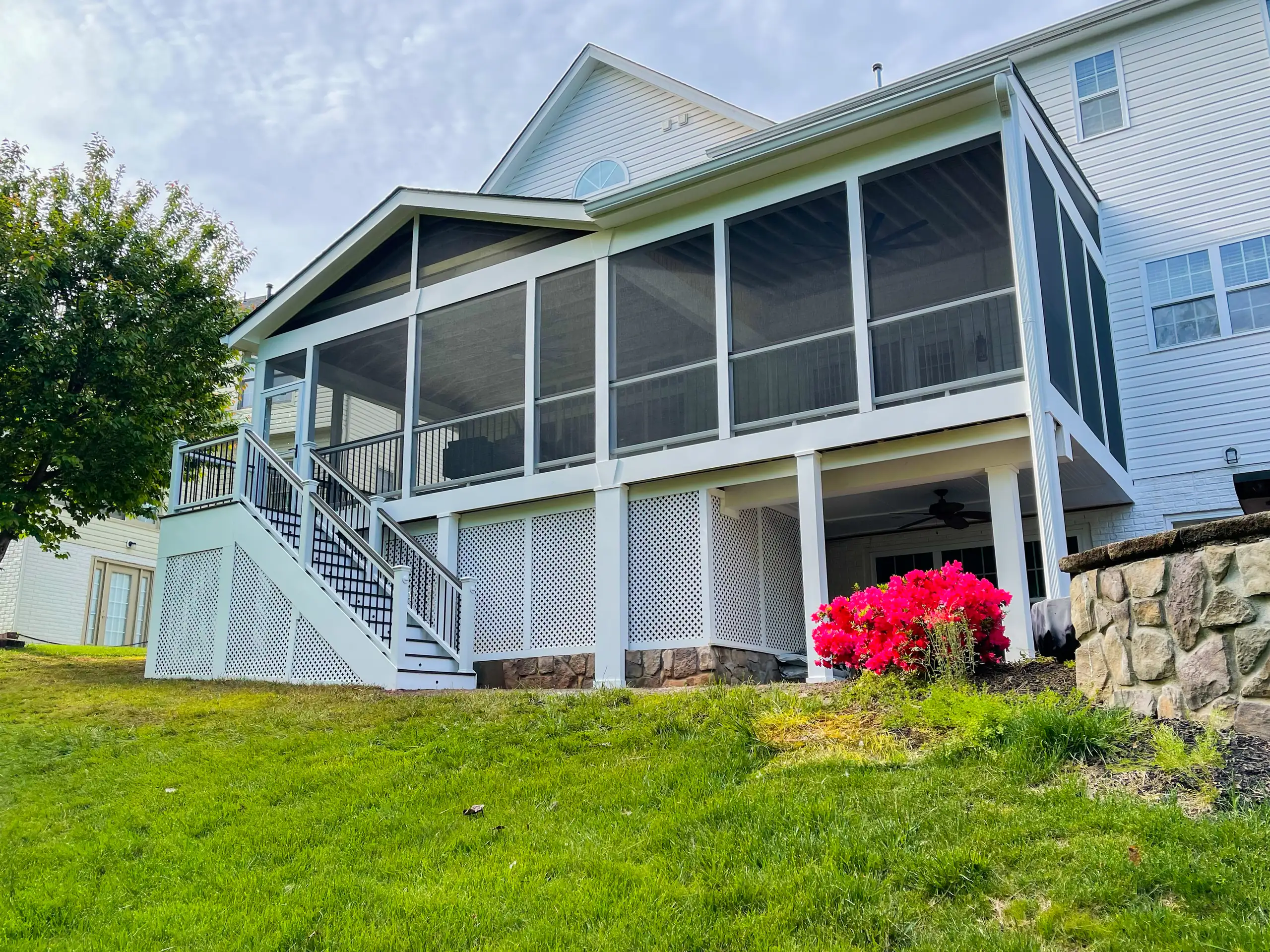
Successfully enclosing a deck requires addressing structural load requirements first. The project must begin with a robust roof structure to handle snow load and create the necessary vertical support.
Once the structure is secured, the walls can be finalized using one of two primary approaches: rigid panel systems or flexible drop curtains. You can apply these methods:
- Roofing and Wall Panels: The most effective method involves adding a permanent roof structure over the deck, followed by wall panels. These panels can be:
- Screened Panels with Vinyl Inserts: Existing screen room panels can be modified with clear vinyl inserts that slot into place for winter, converting a warm-weather enclosure into a cold-weather shield.
- Modular Window Systems: Pre-fabricated vinyl or aluminum-framed windows (single-pane or acrylic) can be installed to create solid walls, providing better insulation and wind protection than simple screens.
- Vertical Drop Curtains: Heavy-duty, clear vinyl curtains can be custom-fitted to hang from the deck’s existing roof or pergola structure. These curtains are rolled up or down as needed and secured with fasteners, forming a flexible, temporary wall against wind and rain.
Why You Should Enclose Your Deck for Winter
Enclosing a deck for winter prevents exposure to freezing temperatures, heavy snow, and icy conditions, preserving its structural integrity and finish.
- Prevents Structural Damage: Shields wood or composite materials from heavy snow loads and the erosive effects of repeated freeze-thaw cycles.
- Reduces Maintenance: Minimizes cracking, warping, and fastener corrosion by eliminating direct exposure to ice and moisture.
- Extends Lifespan: Protects decking material and substructure from degradation, extending the deck’s overall service life.
Deck Roofing Options for Winter
A robust roof is fundamental for winterizing a deck, providing protection from snow and ice accumulation and creating a foundation for vertical enclosures.
| Roofing Type | Structural Requirement | Best Application |
| Permanent Extension | Requires structural tie-ins to the main house roof (gable/shed style); must meet snow load codes. | Maximum stability and cohesive appearance. |
| Insulated Patio Covers | Lightweight aluminum panels with internal insulation; designed for thermal protection and heavy snow loads. | Superior thermal performance below. |
| Solid Pergola Cover | Existing structure must be reinforced; materials like polycarbonate or waterproof corrugated sheets are added. | Cost-effective retrofit option. |
Winterizing Your Deck
Proper maintenance protects the deck materials and minimizes long-term damage, even before the enclosure is complete.
- Deck Cleaning and Sealing: A thorough cleaning to remove dirt, mildew, and leaves prevents moisture retention. Applying a fresh coat of sealant or stain offers a protective barrier against moisture penetration.
- Drainage Inspection: Verify that deck drainage systems (gutters, downspouts, deck surface pitch) are clear and functioning correctly to divert melting snow and rain away from the structure and foundation.
- Inspection for Damage: Inspect the deck for any loose boards, protruding fasteners, or signs of rot. Address these issues before winter to prevent minor problems from worsening under certain conditions.
Technical Data Snapshot: Key Winter Metrics
Professional builders use specific metrics to ensure structural integrity and scheduling efficiency during winter deck construction:
Structural Integrity Requirements
- Footing Depth: Building codes require footings to extend at least 12 inches below the local frost line to prevent frost heave (where freezing soil expands and lifts the structure). In northern regions, this mandates a minimum footing depth of 30 to 48 inches.
- Concrete Curing: Concrete needs a minimum temperature above $50^\circ\text{F}$ for optimal strength development. In cold weather, the curing time for footings and piers is extended by 50% to 100%, requiring the use of insulating blankets or heating pads.
- Material Gaps: Builders must increase the required installation gap between deck boards in cold weather. This prevents warping and buckling by accommodating the material’s expansion when temperatures return.
Scheduling & Financial Metrics
- Contractor Availability Shift: Contractor availability typically increases by 30% to 50% during late fall and winter compared to peak seasons, enabling significantly faster project starts.
- Return on Investment (ROI): A quality deck yields a strong ROI, often recovering 65% to 80% of the cost upon resale. Material choice matters: composite decking generally yields a higher return than treated wood.
Frequently Asked Questions
How to Make a Patio Comfortable in Winter?
To make your patio usable in winter, enclose it with a temporary solution like clear vinyl curtains or a modular panel system, or consider a permanent structure with insulated walls. Supplemental heat (electric infrared or propane patio heaters with proper ventilation) is necessary to maintain warmth.
What is the Best Way to Heat a Screened Porch in Winter?
Keeping a screened-in porch warm in winter requires sealing the screens with clear vinyl or glass inserts to block wind, then adding supplemental heat. Electric infrared heaters, wall-mounted propane heaters, or a small, vented wood-burning stove are effective. Ensure any combustion heater has adequate ventilation.
What Steps are Needed to Winterize and Use a Deck?
Make a deck usable in winter by adding a solid roof (an integrated extension or an insulated patio cover) and enclosing the sides with modular window systems or heavy-duty vinyl curtains. Incorporate heating elements like mounted electric heaters and ensure proper deck drainage to prevent ice accumulation.
What Methods are Used to Enclose a Deck?
You can enclose your deck by adding a permanent roof (like a gable or shed extension from the house) and then installing side enclosures. Options for walls include screen panels with clear vinyl inserts, modular window systems, or custom-framed walls with insulation. Always verify structural integrity and local permit requirements.
Is Structural Inspection Required to Enclose an Existing Deck?
Yes, an existing deck can be enclosed, but a structural inspection is mandatory. The deck’s footings, joists, and beams must be verified to support the additional vertical load of a new roof and wall system, as well as snow and wind loads. Reinforcement, such as upgrading posts, may be required to meet current building codes.
Why Choose Prince William Home Improvement for Your Patio and Deck Enclosures?
Navigating the options for winterizing your outdoor spaces, from temporary solutions to permanent additions, requires a knowledgeable partner. Prince William Home Improvement specializes in designing and constructing custom Outdoor Living features that extend your home’s functionality year-round..
Our expertise includes:
- Deck Enclosures: Offering custom roofing solutions (like integrated gable or shed roofs) and durable wall systems that protect against winter elements.
- Patio Enclosures: Designing custom patios, whether new construction or enclosing existing slabs, with options for permanent glass or flexible deck features.
- Structural Assurance: Verifying the integrity of your decks before enclosure and performing necessary reinforcements.
We deliver durable, high-performing structures that protect your investment and expand your usable living area. Request your free project consultation to explore how we can create a comfortable, functional outdoor haven for you this winter!