

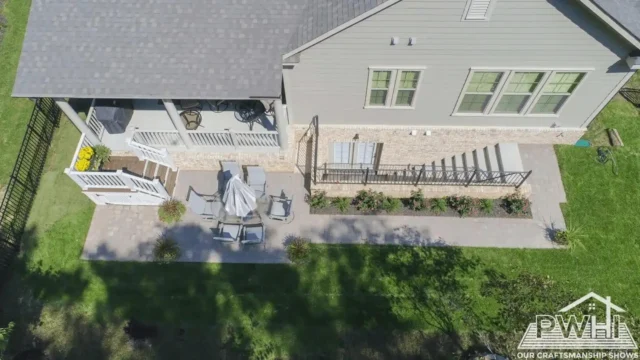
Picture this: It’s the first warm weekend of spring, and while your neighbors are frantically calling contractors and getting waitlisted until July, you’re already firing up the grill on your stunning new patio. That’s the power of fall planning.
In Short, Why Fall is Prime Time for Your Patio Investment
Think patio season is over? Think again. While neighbors pack away their outdoor furniture, smart homeowners are planning their dream patio projects. Fall construction offers 15-20% cost savings, better contractor availability, and ideal weather conditions for installation. You’ll skip the spring rush, get premium attention to detail, and be ready to host that first BBQ of the season while others are still drawing up plans. Bottom line: Fall planning equals spring bragging rights and serious property value gains.
The Fall Advantage: More Than Just Timing
Why Smart Homeowners Build in Autumn
The construction industry follows predictable patterns, and savvy property owners capitalize on seasonal fluctuations. Fall presents a perfect storm of advantages:
- Contractor Availability: Summer’s frantic pace gives way to manageable schedules. Your project gets the attention it deserves rather than being squeezed between rushed jobs.
- Material Procurement: Suppliers aren’t scrambling to meet peak demand. You’ll have access to premium materials and a better selection without lengthy backorders.
- Weather Stability: Virginia’s mild autumn temperatures create optimal curing conditions for concrete and mortar, resulting in stronger, longer-lasting installations.
Fall vs. Spring Construction: The Numbers Don’t Lie
| Factor | Fall Construction | Spring Construction |
| Contractor Availability | 3-4 week lead times | 8-12 week wait lists |
| Material Costs | 10-15% lower | Peak pricing |
| Weather Delays | Minimal (stable patterns) | High (spring storms) |
| Project Attention | Focused, detailed work | Rushed to meet demand |
| Completion Timeline | On schedule | Frequent delays |
| Cost Savings | 15-20% total project | Standard pricing |
Virginia’s Climate Sweet Spot
Understanding Regional Weather Patterns
Virginia’s diverse climate zones create unique opportunities for fall construction. The Piedmont region experiences its most stable weather from mid-September to November, with average temperatures between 50°F and 70°F – ideal for outdoor work.
Optimal Construction Windows by Region:
- Northern Virginia: October 1 – November 15
- Central Virginia: September 15 – November 30
- Coastal Virginia: September 1 – December 15
Pro Tip: Concrete pavers require temperatures above 40°F for proper setting. Virginia’s extended fall season provides ample time for quality installation before winter freeze cycles begin.
Your Complete Patio Build Checklist
Phase 1: Pre-Construction Planning (4-6 weeks)
✅ Site Analysis & Design
- Professional site survey with laser measurements
- Soil composition testing (clay content affects drainage)
- Slope analysis for proper water management
- Existing utility location (call 811 at least 3 days prior)
- Design consultation and 3D modeling
✅ Permits & Approvals
- HOA architectural review (if applicable)
- County permits for projects over 200 sq ft
- Setback compliance verification
Phase 2: Material Selection (2-3 weeks)
Premium Paver Options Comparison:
| Material Type | Durability | Maintenance | Cost Range | Best For |
| Natural Stone | 50+ years | Medium | $15-25/sq ft | Luxury applications |
| Concrete Pavers | 25-30 years | Low | $8-15/sq ft | High-traffic areas |
| Clay Brick | 40+ years | Medium | $10-18/sq ft | Traditional aesthetics |
| Permeable Pavers | 25+ years | Medium | $12-20/sq ft | Eco-conscious projects |
Phase 3: Construction Execution (2-4 weeks)
Foundation Specifications:
- Excavation depth: 8-10 inches for standard patios
- Base layer: 4-6 inches compacted crushed stone
- Sand leveling course: 1-2 inches
- Edge restraint installation
- Paver installation with proper joint spacing
Technical Deep Dive: Foundation Fundamentals

The Science Behind Long-Lasting Patios
Base Layer Engineering: The foundation determines everything. Virginia’s expansive clay soils require specific base preparations to prevent settling and cracking.
Recommended Base Composition:
- Aggregate Base: #57 crushed stone provides excellent drainage and stability
- Compaction Requirements: 95% Standard Proctor Density (verified with nuclear gauge)
- Geotextile Fabric: Prevents soil migration in clay conditions
- Edge Restraints: Concrete or steel prevents lateral movement
Drainage Mathematics: Proper slope calculation: 1/4 inch per foot minimum grade away from structures. For a 20-foot patio, that’s a 5-inch drop – barely noticeable visually but critical for water management.
Pro Installation Secrets
What Separates Premium from Standard
Joint Sand Technology: Polymeric sand isn’t just sand – it’s engineered for performance. When activated with water, polymers create flexible bonds that resist ant infiltration and weed growth while allowing for thermal expansion.
Installation Technique:
- Screeding: Mechanical screeding produces a consistent 1-inch sand bed thickness
- Compaction Pattern: Three-pass compaction with plate vibrator at different angles prevents lip formation
- Joint Filling: Multiple sand applications with controlled water activation
Quality Control Checkpoints:
- Base compaction testing at 3-foot intervals
- Level verification using rotating laser systems
- Joint consistency measurement (3-5mm standard)
- Final surface tolerance: ±1/8 inch over 10 feet
ROI Analysis: Investment vs. Returns
The Luxury Patio Premium
High-end patio installations typically range from $25-40 per square foot in Virginia, but the returns justify the investment:
Property Value Impact:
- Standard Patio: 40-50% cost recovery
- Premium Installation: 65-85% cost recovery
- Luxury Features (fire pit, lighting, built-ins): 70-90% cost recovery
Market Analysis: Northern Virginia properties with professional hardscaping sell 12% faster and command 3-5% higher sale prices compared to similar homes without outdoor improvements.
Advanced Features Worth Considering
Beyond Basic Paving
- Integrated Lighting Systems: LED strip lighting under coping stones creates a dramatic nighttime ambiance while providing safety illumination. Low-voltage systems (12V) offer energy efficiency and easy expansion.
- Built-In Fire Features: Gas fire pits require underground utility installation – much easier during initial construction than retrofit. Propane alternatives offer placement flexibility without utility constraints.
- Drainage Integration: Trench drains and decorative catch basins handle Virginia’s heavy rainfall events while maintaining aesthetic appeal.
Maximizing Your Investment
Strategic Planning for Long-Term Value
Phased Development Approach: Start with foundational patio installation in the fall, then add features like outdoor kitchens, pergolas, or water features in subsequent seasons. This spreads costs while allowing you to enjoy immediate benefits.
Maintenance Planning:
- Annual: Joint sand replenishment, sealer application
- Bi-annual: Deep cleaning, weed prevention treatment
- As-needed: Individual paver replacement, edge restraint adjustment
Common Pitfalls to Avoid
Learning from Others’ Mistakes
- Inadequate Drainage: Virginia clay expands when wet, contracts when dry. Poor drainage leads to settling, cracking, and costly repairs.
- Cheap Base Materials: Crushed concrete or recycled aggregates may contain contaminants that affect long-term stability.
- DIY Edge Restraints: Plastic edging fails under freeze-thaw cycles. Professional installations use concrete or steel restraints rated for regional conditions.
Frequently Asked Questions
How long does a typical patio installation take in the fall?
Most patio projects take 2-4 weeks from start to finish. A 400 sq ft patio typically requires 5-7 working days, weather permitting. Complex designs with built-in features may take 3-4 weeks to complete.
What’s the latest I can start a patio project in Virginia?
Mid-November is the cutoff for Northern Virginia. Projects require 5-7 consecutive days with temperatures above 40°F for proper installation. Starting after Thanksgiving risks weather delays, pushing completion into spring.
How much should I budget for a quality patio?
Professional installations range $15-40 per square foot, depending on materials and features. A 300 sq ft basic paver patio starts around $4,500, while luxury installations with premium materials and features run $8,000-12,000.
Do I need permits for my patio project?
Patios under 200 sq ft typically don’t require permits in most Virginia counties. Larger projects, raised patios, or those with electrical/gas features usually need permits. Your contractor should handle permit applications.
What maintenance does a paver patio require?
Annual joint sand replenishment, bi-annual cleaning, and sealer application every 2-3 years. Properly installed patios need minimal maintenance – maybe 2-3 hours per year for basic upkeep.
How do I choose between concrete pavers and natural stone?
Concrete pavers offer consistent sizing, lower cost ($8-15/sq ft), and easier maintenance. Natural stone costs more ($15-$ 25/sq ft) but provides a unique character and typically lasts longer. Both work well in Virginia’s climate.
Your Next Move: Start Planning Today
Fall construction offers significant advantages, including 15-20% cost savings, improved contractor availability, and optimal weather conditions. The math is simple – start now, save money, and be ready for the spring entertaining season.
Prince William Home Improvement specializes in luxury patio construction throughout Northern Virginia and Maryland. With an A+ Better Business Bureau rating and proven expertise in premium outdoor installations, PWHI delivers quality that lasts decades. Every project includes professional design consultation, premium materials, and precision installation.
The difference is evident in the details: proper foundation engineering, high-quality material sourcing, and installation techniques that withstand Virginia’s challenging climate conditions. PWHI‘s approach protects your investment while creating spaces that add substantial property value.
Schedule your free consultation and start your fall patio project. While others wait for spring and pay premium prices, you’ll be hosting your first outdoor gathering on a stunning new patio!