


When planning an outdoor deck, one of the most critical questions homeowners ask is: how long does composite decking last? Experienced Northern Virginia deck builders can help homeowners evaluate this detail. Unlike traditional wood decking that requires constant upkeep and replacement every 10–15 years, composite decking offers a significantly longer lifespan with minimal maintenance. If you’re considering composite materials for your outdoor space, understanding their longevity helps you make an informed investment decision.
This guide examines real-world durability, compares composite to alternatives, and reveals the key factors that determine how many decades your deck will serve you.
How Long Does a Composite Deck Last on Average?
If you are looking for a “one-and-done” backyard solution, composite decking is the industry standard. While wood begins to degrade the moment it is exposed to the elements, composite is engineered to remain structurally sound for decades without intensive labor.
Average Lifespan of Composite Decking
Most composite decks last 25 to 30 years, while premium brands often reach 35 to 50 years. Your deck’s actual lifespan depends on the material quality, your local climate, and how consistently you clean it.
By blending wood fibers with recycled plastic, the composite resists rot, warping, and insect damage that traditional wood can suffer. Modern boards are “capped” in a protective polymer shell, shielding the core from moisture and UV damage to ensure decades of durability.
Composite Decking vs Traditional Wood Lifespan
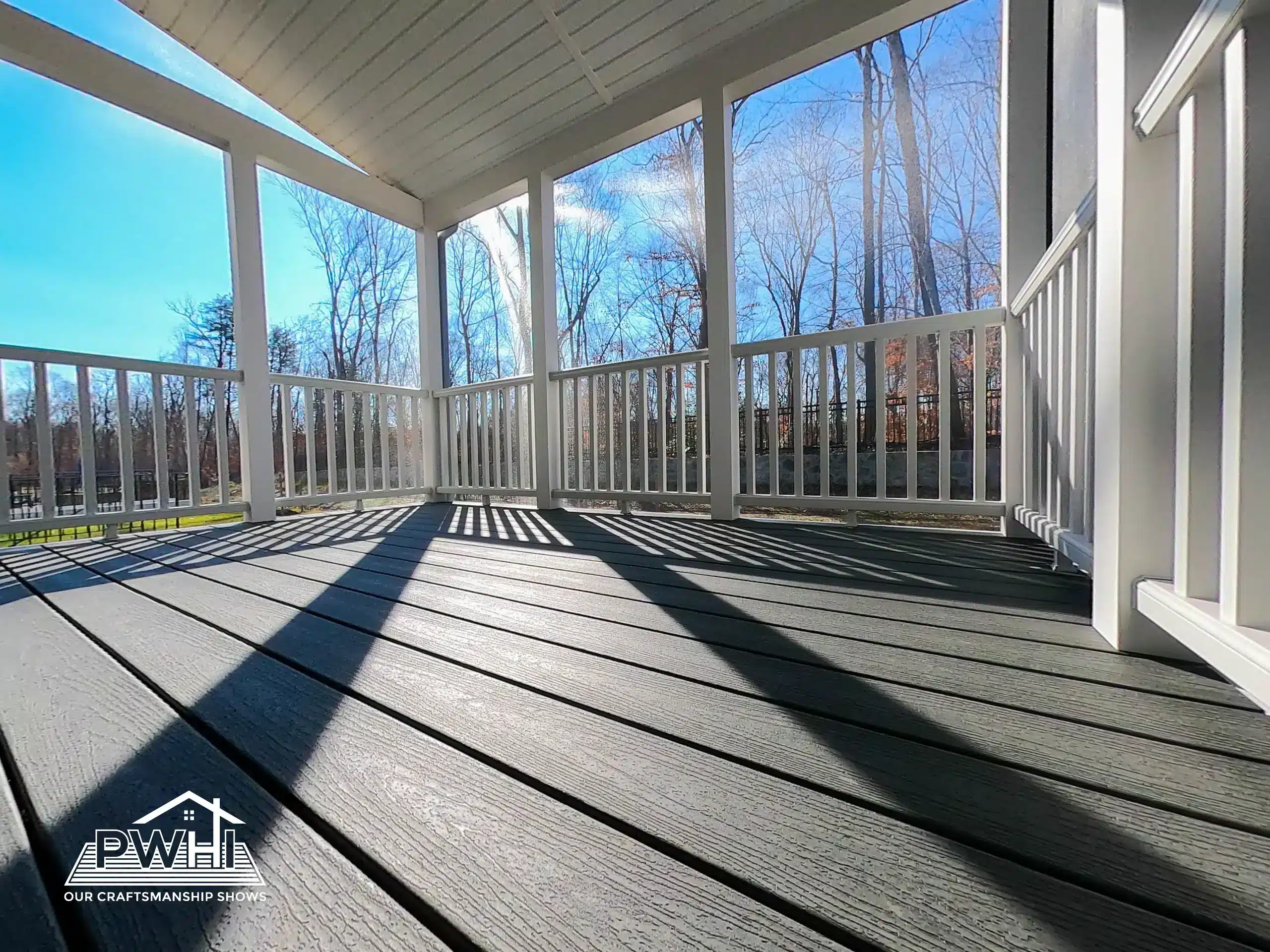
The longevity gap between composite and wood becomes clear when you examine typical lifespans:
- Pressure-treated pine: 10–15 years. Even with chemical treatment, pine is a softwood that remains susceptible to moisture absorption, leading to rot, splinters, and significant warping within a decade.
- Cedar: 15–20 years with annual maintenance. Cedar contains natural oils that resist insects, but it is soft and will weather to a grey color and deteriorate rapidly without consistent sealing.
- Redwood: 20–25 years with diligent care. While more durable than pine, redwood is increasingly expensive and requires annual staining to prevent moisture from penetrating the grain.
- Composite decking: 25–30+ years with occasional cleaning.
How Long Does Trex Decking Last?
Trex, the industry’s leading composite manufacturer, produces materials engineered to last 30–40 years or more. After three decades of refinement, Trex has perfected manufacturing processes that create exceptionally durable boards across their entire catalog, including the Signature®, Transcend®, Select®, and Enhance® product lines.
- Protective Shell: High-performance lines like Signature and Transcend feature a thickened, three-sided cap protection that shields the wood-plastic core from moisture and UV damage.
- Surface Integrity: This technology ensures boards do not “fuzz” or flake over time, unlike uncapped alternatives. Even the entry-level Enhance and mid-tier Select lines utilize this shell technology to outperform traditional timber.
Trex Decking Warranty vs Real-World Lifespan
Trex’s industry-leading warranties provide insight into expected durability:
- 25 to 50-year limited residential warranty: Covers material defects and structural integrity. (Premium lines like Signature and Transcend now offer an industry-best 50-year warranty).
- 25-year fade-and-stain warranty: Protects against color fading and common food/beverage stains for Select and Enhance lines.
- 10-year commercial warranty: For high-traffic commercial installations.
Real-world performance often exceeds these warranty periods. Many homeowners report that their Trex decks have performed flawlessly for 30+ years with nothing more than periodic soap-and-water cleaning.
Factors That Impact How Long Trex Decks Last
- Product tier: Transcend and Signature feature a much thicker, harder-wearing shell than the Enhance or Select lines, making them more resistant to the friction of heavy foot traffic and furniture movement over several decades.
- Installation precision: Proper spacing and support prevent premature failure. Boards installed without proper thermal gaps can stress fasteners during seasonal expansion.
How Long Do Composite Decks Last Compared to Other Materials?
Composite Decking vs Pressure-Treated Wood
Wood is prone to “checking” (small cracks along the grain), which allows water to sit inside the board and rot it from the inside out. Composite is a non-porous surface that prevents this. Over 30 years, you will likely rebuild a treated deck 2–3 times, whereas a composite deck is a one-time installation.
Composite Decking vs Cedar and Hardwood
- Cedar: Natural beauty but deteriorates rapidly without regular sealing.
- Exotic hardwoods (Ipe): Can match composite lifespans (25–40 years) but demand specialized installation skills, premium pricing, and meticulous annual oiling to maintain color.
- Composite: Delivers comparable longevity with substantially less expertise and effort required.
Composite Decking vs PVC Decking
- Water resistance: PVC contains no organic wood fibers, making it the superior choice for pool surrounds and docks.
- Heat & Cold: Composite maintains better rigidity in high temperatures; PVC can become more flexible in direct sunlight. Composite handles freeze-thaw cycles better than PVC, which can become brittle in extreme cold.
What Affects How Long Composite Decking Lasts?
Climate and Weather Exposure
- UV Radiation: Gradually fades colors over decades, though capped composites resist this better than any other outdoor material.
- Freeze-thaw cycles: Cause expansion and contraction that stress joints; high-quality stainless steel hidden fasteners can mitigate this stress.
Installation Quality and Structural Support
Even premium composite decking won’t reach its lifespan potential without proper installation.
The Pro Tip: Most composite decks fail because the wood frame rots while the boards are still perfect. Using Joist Tape (like Trex Protect) during installation prevents moisture from rotting the top of the wooden joists, ensuring the foundation lasts as long as the 30-year boards.
Foot Traffic and Daily Use
- Concentrated Weight: Heavy furniture (like cast-iron grills) can create permanent impressions over decades if not moved occasionally.
- Surface Wear: High-traffic zones show more wear, but composite resists scratching significantly better than cedar or pine. The structural integrity rarely fails; only the surface sheen may dull after decades of hard use.
Maintenance Habits and Cleaning Frequency
While marketed as ‘low-maintenance,’ some care extends life. Washing 2–3 times per year prevents mold growth and staining. Removing wet leaves prevents them from sitting in gaps, which can trap moisture against the substructure and cause drainage issues.
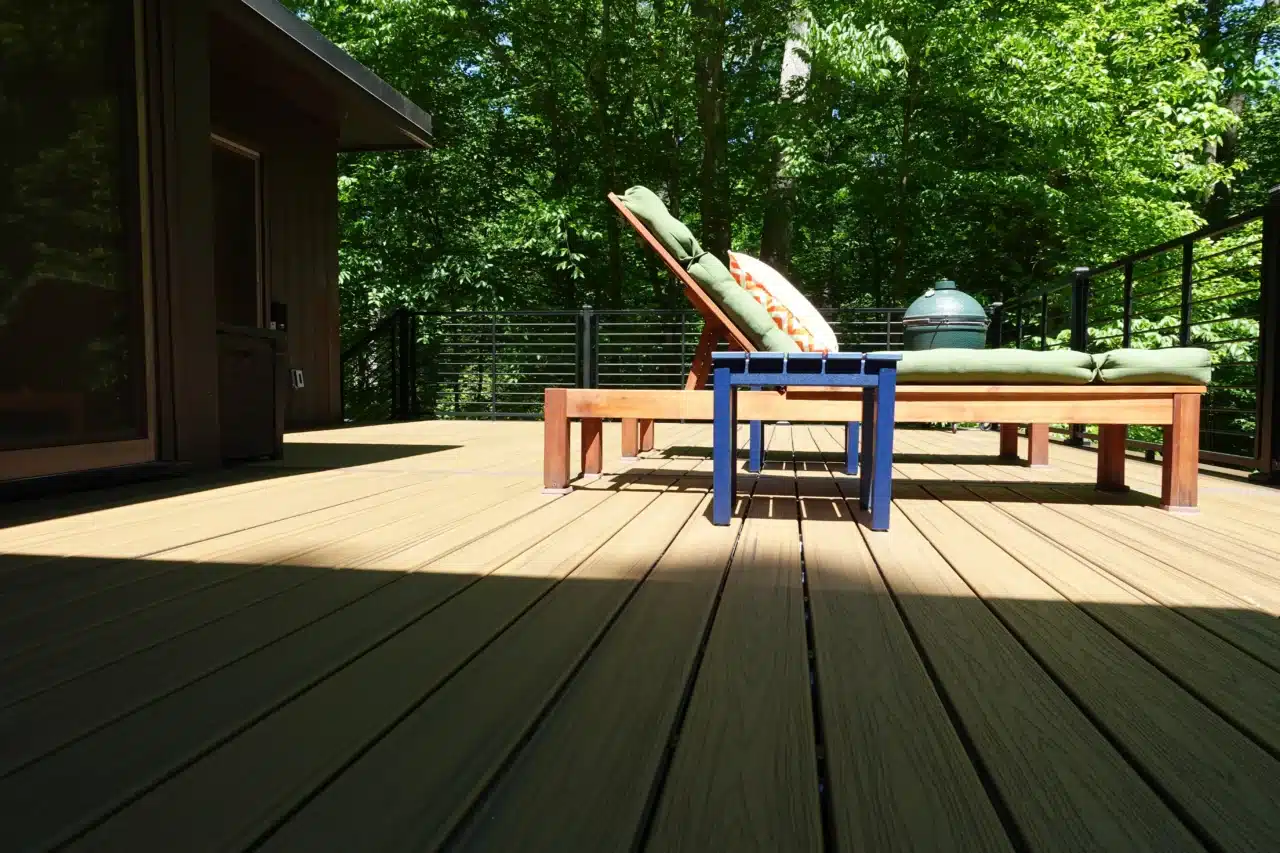
How Long Does a Trex Deck Last in Real Homes?
Real-world performance is the ultimate benchmark. Homeowners care about how these decks hold up in daily life, not just in lab tests. Here is how Trex performs across real environmental stressors:
- High-Sun Performance: In homes with intense southern exposure, natural wood decks bake and splinter within years. Real-world reports show that Trex decks under the same conditions maintain colorfastness for 20+ years.
- Extreme Moisture & Snow: Homeowners in high-snowfall regions report that Trex boards do not absorb moisture during the spring thaw. Unlike wood, they won’t heave or swell after being buried in snow for months.
- Active Family Life: In real homes with large dogs and heavy foot traffic, modern Trex shells, especially in the Signature and Transcend lines, show remarkable scratch resistance. Spilled burger grease or red wine typically wipes clean within 24 hours.
Why Homeowners Choose Composite Decking for Long-Term Value
Beyond durability, homeowners select composite for practical advantages:
- Predictable performance: Every board is consistent, unlike wood, which has knots and variable grain.
- Splinter-free surface: Safer for bare feet and children throughout decades of service.
- Time savings: Reclaim 20–30 hours annually previously spent on maintenance.
- Property value: A high-quality composite deck serves as an “outdoor room,” significantly enhancing a home’s resale potential.
Frequently Asked Questions
Which is better, Trex or composite decking?
Trex is a brand of composite decking, not a separate material. It leads the industry in reputation and delivers lifespans of 25–30+ years.
What ruins composite decking?
Harsh chemicals like chlorine bleach or acetone can damage the protective caps. Improper installation and standing water due to poor drainage can also lead to structural failure.
Will dog pee ruin composite decking?
Dog urine will not ruin the deck, but it can cause odors if not cleaned promptly. Quality protective caps prevent deep absorption. Regular cleaning with soap and water removes any residue.
Should your deck be lighter or darker than your house?
The deck should complement your home by providing contrast. Darker tones create visual interest for light-colored homes, while medium shades prevent dark-colored homes from feeling too “heavy.”