


Quick Takeaway
Effective patio layouts in Northern Virginia strike a balance between 36-inch pathways, defined zones (e.g., a 10×10-foot dining area), and a natural flow that is tied to home entrances. Sloped terrain and clay soils are managed through grading and the installation of 6-inch gravel bases. Materials like concrete pavers or natural stone support both durability and style. In this blog, you’ll learn practical tips to avoid common layout mistakes and create a functional outdoor space.
Need a quick answer on patio layout and flow?
Patio designs in Northern Virginia use clear pathways and defined zones for functionality. The practical tips below help homeowners build inviting outdoor areas.
Ever walked onto a patio that felt cramped and disconnected from the house? You’re not alone. A great patio isn’t just about the materials; it’s about a well-thought-out layout and flow that makes the space feel like a natural extension of your home. A well-designed layout strikes a balance between open areas and defined spaces for seating or dining.
What Makes a Patio Layout Functional?
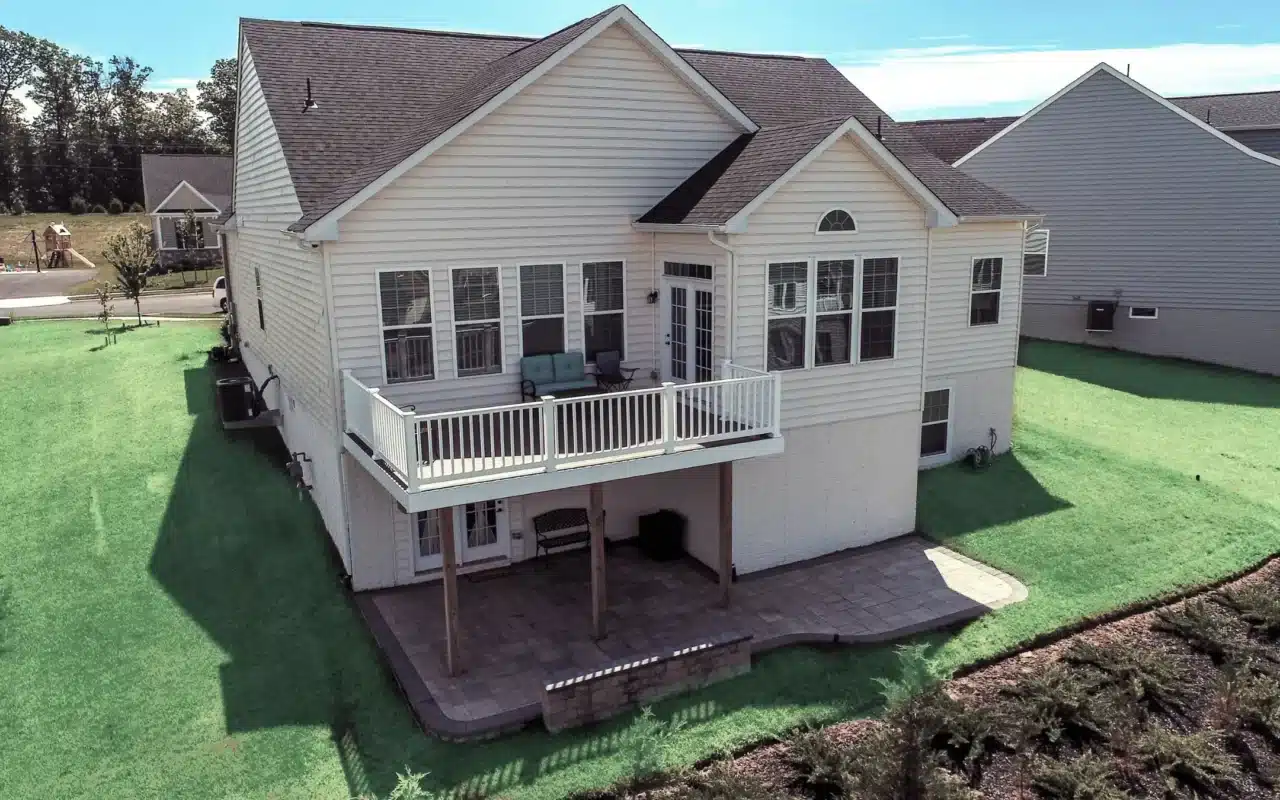
Patio design prioritizes how people move through and use the space. A functional layout prevents clutter and provides easy access to key areas.
- Clear Pathways: Wide paths reduce tripping risks and guide foot traffic naturally. A minimum 36-inch walkway width comfortably accommodates groups.
- Defined Zones: Separate areas for dining, lounging, or cooking add purpose without overcrowding. A 10×10-foot dining zone holds a standard six-person table.
- Natural Flow: Layouts aligned with a home’s entry points create smooth transitions. Patios linked to a kitchen door encourage regular use.
- Space for Furniture: Planning for furniture size early avoids cramped layouts. A sectional sofa requires a 12×12-foot area for comfort and movement.
How Is Patio Traffic Flow Planned?
Traffic patterns depend on how a backyard is used. Strong traffic flow keeps the patio open and easy to navigate.
- Entry and Exit Points: Multiple access points prevent bottlenecks for larger groups. Secondary exits near gardens or pools improve accessibility.
- Furniture Placement: Seating arranged to face focal points, such as fire pits or views, avoids blocking paths. A central fire pit needs a 6-foot safety clearance.
- Lighting Integration: Path lights and overhead fixtures guide nighttime movement. Low-voltage LED strips along steps reduce stumbles and highlight walkways.
- Activity Zones: Activities like grilling or dining are grouped near utilities, which limits cross-traffic. A grill station near a water source simplifies cleanup.
How Does Terrain Impact Patio Layout?
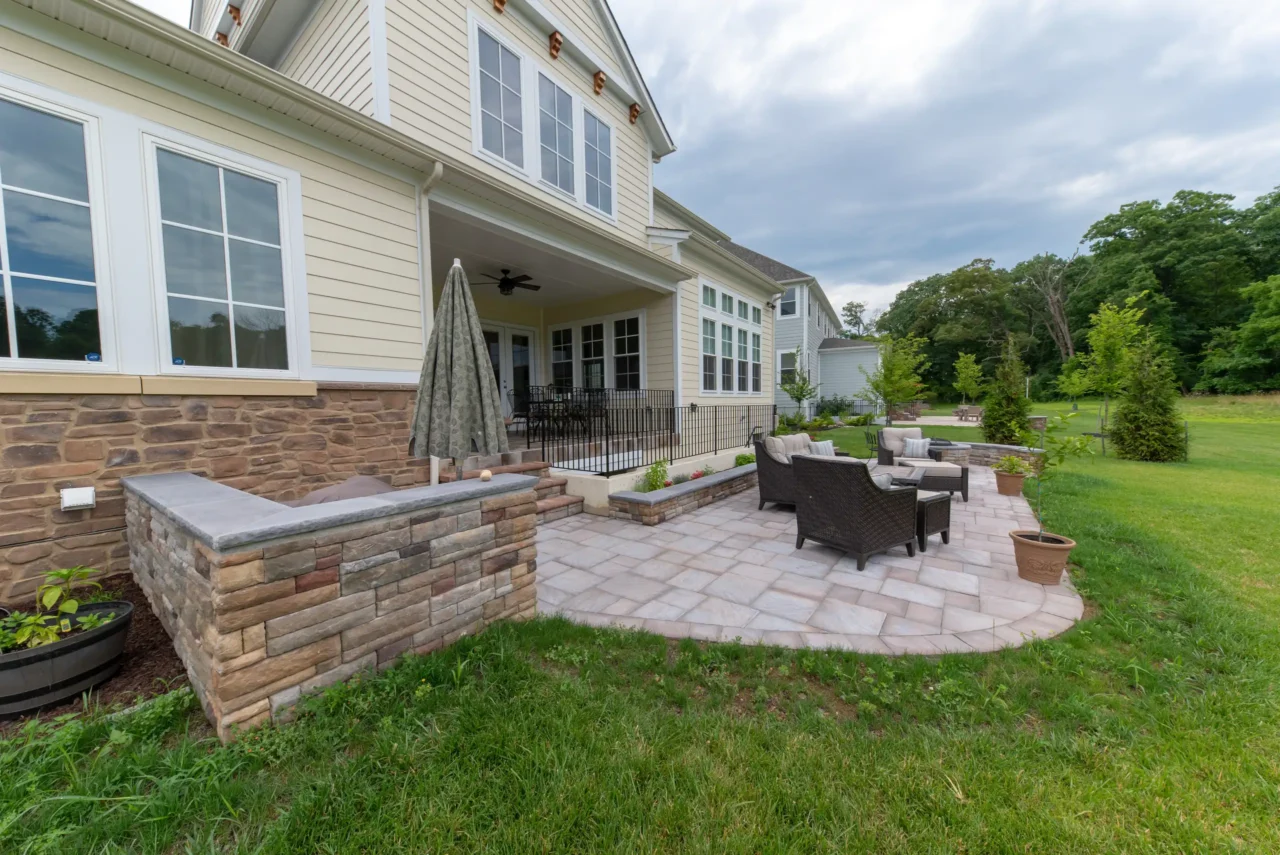
Northern Virginia yards require slope and soil assessment before design. Terrain shapes the layout and prevents problems like water pooling.
- Slope Management: Level patios on sloped lots need grading or tiered designs for stability. Retaining walls create flat zones while maintaining natural drainage.
- Drainage Planning: Proper grading directs water away from the patio surface. Channel drains on flat lots prevent puddling during heavy rain.
- Soil Stability: Clay-heavy soils in Northern Virginia need compacted bases to avoid shifting. A 6-inch gravel base supports heavy pavers and foot traffic.
- Natural Features: Preserving trees or rocks defines zones without added costs. A mature oak anchors a seating area with natural shade.
What Are Common Patio Layout Mistakes to Avoid?
Poor planning leads to patios that feel cramped or impractical. Addressing common errors helps homeowners achieve a functional outdoor living space.
- Overcrowding Furniture: Too many pieces in a small area restrict movement. A 100-square-foot patio should limit seating to four chairs and a small table.
- Ignoring Drainage: Failing to account for water flow causes puddling or erosion. Sloped grading or channel drains prevent buildup on flat surfaces.
- Misaligned Entries: Patios disconnected from home entrances feel isolated. Aligning the layout with a kitchen door encourages regular use.
- Neglecting Lighting: Dark patios limit evening functionality. Low-voltage LED lights along paths provide safe navigation after sunset.
Which Materials Support Patio Layout and Flow?
Materials are selected based on durability, maintenance, and support for functionality in Northern Virginia’s climate. The table below details key options:
| Material | Durability | Maintenance Needs | Best Use in Layout | Cost Range (per sq. ft.) |
| Concrete Pavers | Resists cracking, fading; ICPI-compliant | Occasional sealing; sweep debris | Main walkways, dining zones, modern layouts | $8–$15 |
| Brick Pavers | Chips over time; strong for light use | Moss control in shade; regular sweeping | Curved pathways, seating nooks, classic designs | $10–$20 |
| Natural Stone | Weathers naturally; high load capacity | Periodic cleaning; reseal every 3–5 years | Focal points, high-traffic zones, blending with nature | $15–$30 |
| Porcelain Tiles | Stain-resistant; high moisture resistance | Easy cleaning; no sealing needed | Small patios, modern designs, poolside areas | $12–$25 |
Concrete pavers offer clean, uniform lines for modern layouts, while brick pavers create a warm, rustic feel with curved patterns. Natural stone, such as flagstone, adds an organic, textured look that blends with gardens, while porcelain tiles provide a sleek finish for contemporary designs.
Patio Layout and Flow FAQs
How much space is needed for a patio?
A small patio starts at 100 sq. ft. for basic seating. Larger layouts (200–300 sq. ft.) allow multiple zones and better circulation.
Can a fire pit be added to a small patio?
A fire pit requires a 6–8-foot clearance for safety and seating. Corner fire pits maximize small spaces.
How can a cramped patio be avoided?
Measuring furniture and activity zones before building confirms adequate room. 3D renderings help visualize layouts before construction.
Should a patio connect to the house?
A patio linked to a main entry, like a kitchen or sliding door, improves access and integration with the home.
Can a patio be used on a sloped yard?
Yes. Grading or multi-tiered designs level sloped yards. Retaining walls and steps create safe, functional patios on uneven terrain.
Let’s Build the Patio Design of Your Dreams
Patio layout and flow in Northern Virginia require careful planning for functionality. At Prince William Home Improvement, we utilize ICPI standards and CAD software to create precise designs for your dream patio.
Schedule a free consultation and start planning your perfect outdoor space today!