


The desire for an accessible outdoor retreat is universal, but the reality of an open deck—heat, sudden rain, and insect activity—often limits enjoyment. A screened-in porch resolves this problem completely, creating an approachable, protected extension of your home’s living area. It becomes a permanent spot for quiet mornings, afternoon reading, or evening dinners, offering fresh air without the everyday annoyances.
Skip the one-size-fits-all approach; we’ve gathered 10 insightful, simple screened-in porch ideas for every home, from ingenious ways to maximize small front spaces to sleek, contemporary back porch designs. Discover how thoughtful planning and professional installation by Prince William Home Improvement can add a valuable, protected room to your home.
What is a Screened-In Porch?
A screened-in porch is a fixed structure, usually built adjacent to a house, featuring a solid roof, a traditional floor, and walls enclosed by mesh screening instead of conventional windows. This elemental composition achieves a highly functional outdoor room. The setup allows for constant air circulation, creating a breezeway effect, while the mesh serves as a physical barrier against natural debris and insects.
It exists as an actual architectural transition—a permanent space that offers the protection of an interior room but feels connected to the yard.
How a Screened-In Porch Adds Comfort to Your Home
A thoughtfully designed screened-in porch serves as a serene sanctuary within the home. It provides a consistently dry, shaded area to appreciate warm breezes and an ideal spot to watch a light storm.
By managing exposure to direct sunlight and precipitation, it establishes a deep sense of calm and safety that wide-open spaces cannot replicate. This addition becomes a simple, welcome relief accessible any day of the week.
Benefits of a Screened-In Porch
Adding a screened-in porch provides several practical, high-value advantages:
- Insect Defense: The screen mesh is a highly effective, continuous barrier against flying insects like mosquitoes and wasps, vastly improving the comfort of the space.
- Weather Shelter: The structural roof protects from both direct sun exposure and rain, expanding the number of days you can comfortably spend outdoors.
- Furniture Preservation: The roof and walls guard furniture, rugs, and décor from UV damage, dirt, and mold, helping outdoor items last longer.
- Increased Functional Square Footage: It converts an existing or new deck/patio area into a versatile room, which home appraisers and potential buyers often count as valued space.
Is a Screened-In Porch Worth It?
For many homeowners, adding a screened-in porch is a smart financial and lifestyle decision. It not only creates a more peaceful environment for daily activities, but it also reliably improves property value. Homebuyers often view screened-in porches as a significant asset, particularly in areas where outdoor living is a popular trend.
For homeowners in the Virginia and Maryland markets, a well-designed screened porch provides a significant competitive advantage in terms of resale value. The investment is generally lower than constructing a traditional full-scale room addition, and the improvement in personal living quality and long-term property appeal is substantial.
10 Simple Screened-In Porch Ideas
Here are 10 actionable, practical concepts for integrating a screened porch into your home’s design.
1. Small Screened-In Porch Idea: The Outdoor Reading Nook
For limited footprints, design the space as a focused relaxation zone rather than trying to incorporate multiple functions. This approach concentrates available square footage into a private, dedicated retreat.
- Focus: Install a single, deep-seated armchair or a suspended swing chair in the corner.
- Space Saver: Use a slender, column-style table next to the seating instead of a wide surface.
- Detail: Mount a weatherproof wall sconce above the seating for focused light.
2. Screened-In Front Porch Idea: The Defined Entry Sitting Room
Screening a front porch creates a formal outdoor reception area. To maintain curb appeal, the design should match the home’s primary architecture.
- Seating: Set out two classic, high-back rocking chairs facing the yard with a single side table between them.
- Visual Strategy: Use a dark, highly durable screen material, which is often less visible from the street, providing daytime seclusion without blocking the view out.
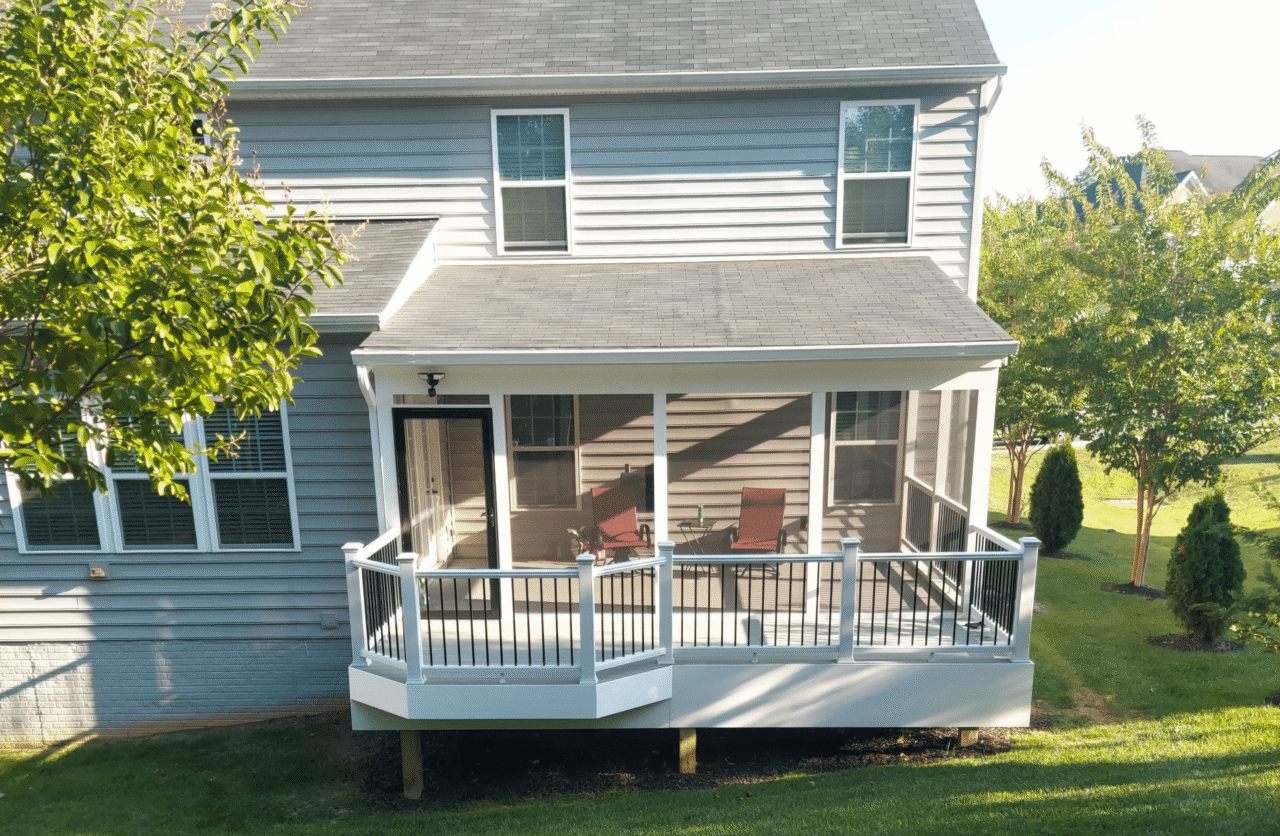
3. Screened-In Back Porch Idea: Elevated Privacy Screening
To maximize seclusion on a back porch, incorporate architectural screening features beyond the standard mesh.
- Lower Wall Detail: Below the main screen line, install horizontal wood slats or wide plank wainscoting.
- Benefit: This solid lower half obscures the direct sight line from nearby neighbors while the upper screened portion remains open to light, sky, and airflow.
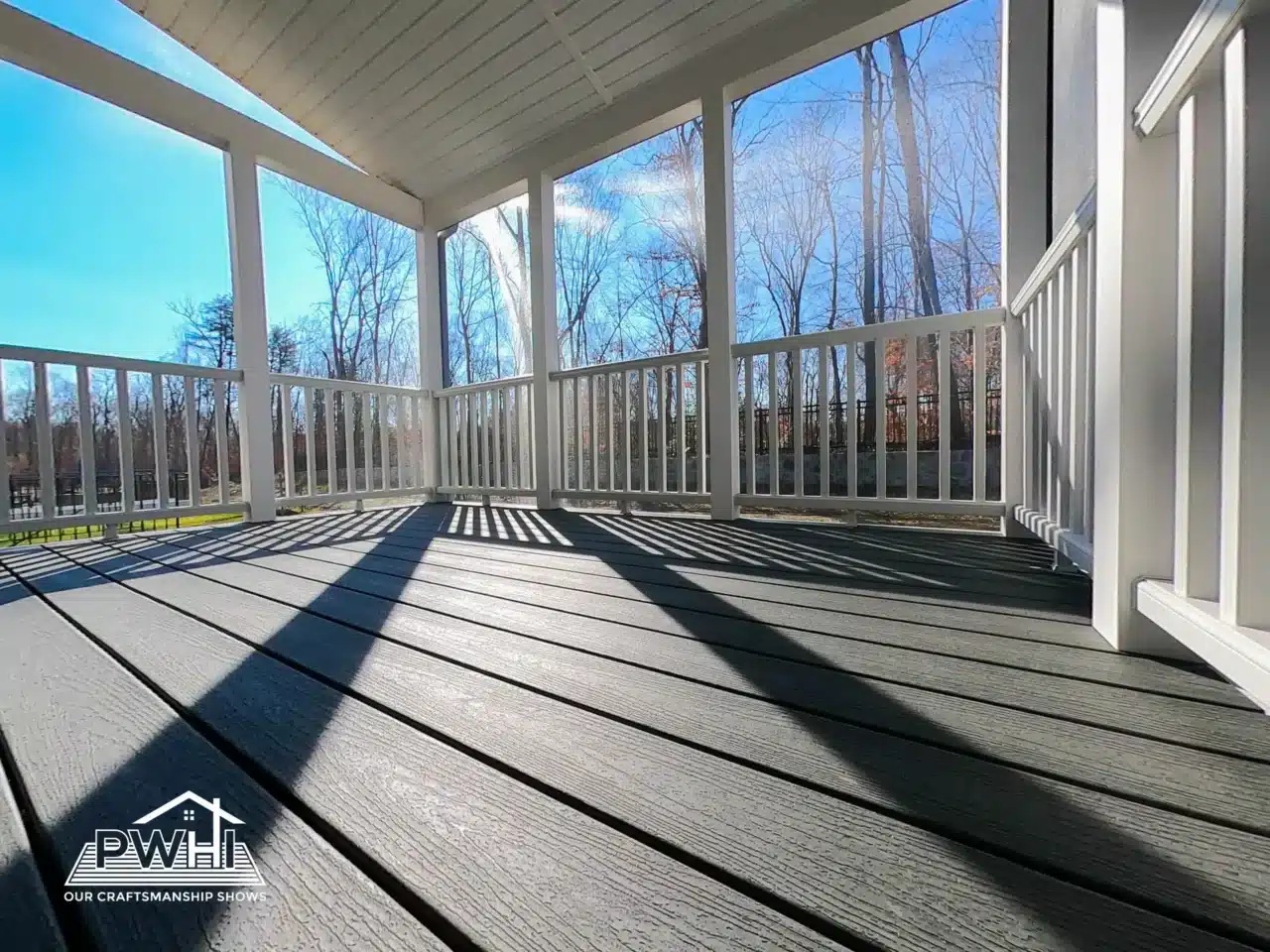
4. Modern Screened-In Porch Idea: Clean Lines and Minimalist Railing
Achieve a contemporary look with a focus on simplicity. The resulting structure should appear open and architecturally deliberate.
- Structure: Utilize an unadorned, flat roofline and select charcoal gray or black aluminum framing for the screens.
- Railing Alternative: Instead of a thick railing system, consider installing thin, vertical metal cables or a clear glass panel at the base to maintain an uninterrupted sightline to the outdoors.

5. Decorating Idea: Layered Lighting and Warm Rugs
To move the porch from a utility space to an inviting room, prioritize tactile details.
- Grounding Element: Select a large, textured outdoor rug—perhaps a woven polypropylene—that fills the seating area.
- Atmosphere: Introduce warmth with layered lighting: use overhead recessed lights for function, then add a pair of lantern-style pendant lights over the seating for a comforting glow.
6. Greenery Idea: Vertical Gardens and Planter Walls
Instead of simply setting pots on the floor, integrate living elements into the porch structure to maximize the garden room feel without consuming valuable floor space.
- Integration: Install narrow, weatherproof shelving to create a vertical planter display on one wall.
- Planting: Use identical square pots for low-maintenance succulents or cascading ferns.
7. Dining Area Idea: The Protected Bistro
Design the porch specifically for small meals, ensuring practical air movement during mealtimes.
- Seating: Select a round or square weatherproof table sized for four people. Use lighter wicker or metal chairs that are easy to move.
- Overhead Comfort: The centerpiece should be a ceiling fan with a light fixture, positioned directly above the table.
8. Material Combination: Rustic Wood and Dark Aluminum
Create visual interest by contrasting materials. This pairing balances the rustic charm of wood with the sharp, clean lines of modern metalwork.
- Warmth: Utilize thick, rough-sawn, or natural cedar posts and beams for the primary structure, showcasing the material’s natural grain.
- Contrast: Then, integrate the black or dark bronze screen framing and door hardware.
9. Lounge Area Idea: Deep Sectionals and High-End Fabrics
Focus the space entirely on leisure by choosing furniture designed for deep relaxation.
- Investment: Select a modular outdoor sectional sofa with high-density foam cushions that resist moisture absorption.
- Durability: The fabrics should be marine-grade or a similar durable, fade-resistant material. A large, simple wooden coffee table completes the arrangement.
10. Lighting Idea: Integrated Deck and Perimeter Illumination
For a safe and appealing nighttime environment, consider integrating lighting beyond the ceiling to create a warm, inviting atmosphere.
- Boundary Glow: Install low-voltage LED strip lighting underneath the porch railing cap to create a subtle perimeter glow.
- Accent: Consider adding small, downward-facing lights to the vertical posts for added illumination.
How Much Does It Cost to Build a Screened-In Porch?
The financial investment required for a screened-in porch varies significantly, depending primarily on whether you are enclosing an existing structure or undertaking new construction.
1. Screening an Existing Structure
This option is the fastest and most affordable since the deck or patio foundation, framing, and roofing are already in place.
- Cost Range: Professional enclosure of an existing porch or deck typically costs between $1,500 and $4,000.
- Key Factors: This range covers labor and basic materials (fiberglass or aluminum screens and a screening system). Costs rise if the existing structure requires repair, reinforcement, or if premium materials such as copper mesh or motorized screens are selected.
2. Building a New Screened-In Porch (New Construction)
New construction is a larger project that encompasses foundation work, framing, roofing, flooring, and screening. This cost is typically calculated on a per-square-foot basis.
- Cost Range: The investment generally ranges from $5,000 up to $40,000 or more.
- Average Square Footage Cost: Expect to pay between $25 and $120 per square foot for a new structure. A basic, low-finish new porch might start at the lower end, while a custom design with composite decking, lighting, and a complex roof structure will place the cost near the high end.
- Material Impact: The choice of materials drastically changes the price.
- Wood Framing & Flooring: Using pressure-treated lumber for the structure and decking is often the most cost-effective solution, though it requires regular maintenance.
- Composite Decking & Aluminum Framing: Materials like Trex composite decking and aluminum frame systems are more expensive initially, but significantly reduce long-term maintenance costs.
- Local Market Influence: In competitive areas like Northern Virginia and Maryland, local building codes and the demand for high-quality outdoor living spaces may place project costs toward the middle to upper end of the national average.
Why Choose Prince William Home Improvement for Your Screened-In Porch?
Prince William Home Improvement (PWHI), a porch builder Northern VA homeowners trust, delivers screen rooms based on three decades of experience and top-tier accreditation.
- Established Expertise: In business since 1986, we operate as a Class A licensed contractor in Virginia and Maryland. Our long history and record, including being named a TrexPro Platinum builder, demonstrate our dedication to structural excellence that covers both.
- Guaranteed Protection: We provide an unmatched, non-prorated warranty covering labor and materials. This includes a 25-Year labor warranty on select composite decking products, offering long-term confidence in your investment.
- Simplified Process: We manage all necessary permits, HOA approvals, and site inspections. This comprehensive approach facilitates the customer’s experience.
- Accessible Options: Our dedicated finance department offers flexible payment plans, including low fixed-rate options and “same-as-cash” promotional terms, making a new screened-in porch accessible now.
Screened-In Porch Ideas FAQs
How much does it cost to build a small screened-in porch?
The cost to screen an existing small porch can range from $1,500 to $4,000. Building a completely new small porch (e.g., 10×10 or 12×12) typically starts around $5,000 for a basic structure and increases based on materials and custom finishes.
Do I need a permit to enclose a screened-in porch?
Yes, in most locations. Any permanent addition or structural modification to your home, including adding a roof and walls to a porch or deck, usually requires a building permit from your local authority. Always check with your local building department.
Does an enclosed porch need a foundation?
Yes, a new screened-in porch generally requires a proper foundation or footers to comply with building codes and prevent structural issues like settling or heaving. If you are screening an existing structure, the existing foundation or deck footers will be reviewed for stability.
Do enclosed porches add value?
Yes, a well-built and attractive screened-in porch generally adds value to a home. It is seen by buyers as additional functional space and a desirable amenity, especially in areas with warm climates.
Do you need footers for a screened-in porch?
Yes. New screened-in porches require footers (concrete supports below the frost line) to support the structure’s weight and prevent movement caused by freeze-thaw cycles. Even screen enclosures on existing concrete slabs often require footers for wind uplift resistance.
Does a screened-in porch increase property taxes?
It can, but the increase is usually modest. Any permanent home improvement that adds value and square footage to your home may result in a higher assessed property value, which can increase your property taxes. The impact depends on local tax laws and the size of the addition.
Ready to Design Your Perfect Outdoor Room?
You have the ideas. Now, it is time to discuss the materials, permits, and costs that fit your property. Whether you are looking for a small, private retreat or a large, modern gathering spot, the experts at Prince William Home Improvement are ready to help.
Don’t wait to start enjoying a bug-free, comfortable outdoor space.
Click Here to Schedule Your Free, No-Obligation Consultation Today!